
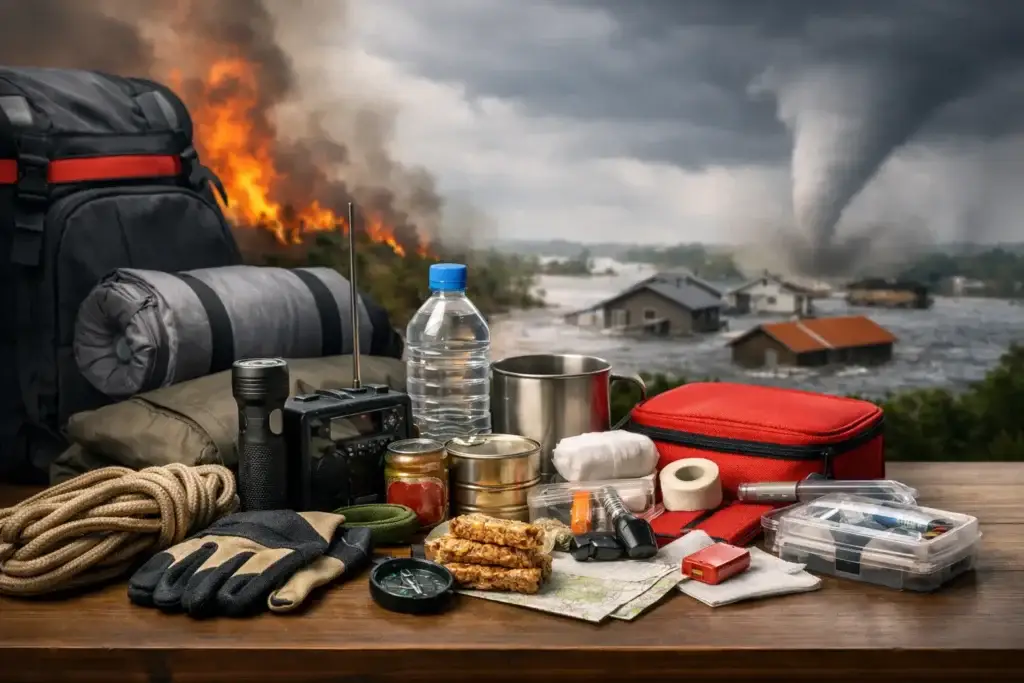
A warning on your phone is not a preparedness plan. When fire moves over a ridge, floodwater reaches the street, or the power fails in freezing weather, your household will rely on what is already in the home, already packed, and already understood. This disaster readiness guide focuses on the first 72 hours, when stores may be empty, roads may be blocked, and help may be delayed.
The goal is not to turn your home into a bunker. It is to remove the dangerous gaps that turn a manageable emergency into a family crisis: no clean water, dead phones, missing medication, no way to leave, or no way to stay warm. Prepare for the hazards most likely where you live, then build enough flexibility to handle the surprises.
Start With the Decisions That Cannot Wait
Gear matters, but decisions matter first. A family that owns supplies but has no evacuation plan can still lose critical time. A family that knows where to go but has no fuel, documents, or pet carrier may not be able to leave when authorities order it.
Decide now under what conditions you will evacuate. For a wildfire, that may be a nearby evacuation warning, visible smoke near your route, or a fire-weather alert that makes staying risky. For flooding, it should be before water covers roads, not after. For hurricanes, follow local evacuation orders early, especially if you live in a storm-surge zone, a manufactured home, or an area with one practical exit route.
Choose two meeting locations: one close to home for a sudden fire or earthquake, and one outside your neighborhood in case local streets are inaccessible. Pick an out-of-area contact who can relay information if local calls fail. Every adult and older child should know the address, phone number, and evacuation route without needing to look it up.
Renters need this plan as much as homeowners. You may not control the building’s roof, wiring, drainage, or generator, but you can control your exit plan, your records, and the supplies that leave with you.
Build Your 72-Hour Core Supply Kit
A 72-hour kit is the baseline, not a guarantee that an emergency will last only three days. Major storms, wildfires, earthquakes, and widespread outages can disrupt water, deliveries, and medical access for much longer. Start with three days per person, then expand toward a week or more as budget and storage allow.
Store the core kit where everyone can reach it quickly. Avoid the garage if it regularly becomes dangerously hot, floods, or is blocked by a vehicle. Use waterproof bins or durable bags, label them clearly, and keep a smaller evacuation go-bag near the exit.
Your household needs these essentials:
- Water: Store at least one gallon per person per day for drinking and basic sanitation. Add a water filter or purification tablets for backup, but do not assume a filter removes every chemical or contamination risk after flooding.
- Food: Keep shelf-stable, ready-to-eat food your family will actually consume. Include a manual can opener, infant formula if needed, and food for pets.
- Light and communication: Pack headlamps, flashlights, spare batteries, a battery or hand-crank emergency radio, charging cables, and fully charged power banks. Headlamps are especially useful because both hands stay free.
- First aid and medication: Keep a first-aid kit sized for your household, prescription medication when possible, copies of prescriptions, glasses, and essential mobility or medical supplies.
- Protection and sanitation: Include N95 masks for smoke, dust, and debris, work gloves, sturdy shoes, hygiene supplies, toilet paper, heavy-duty trash bags, and disinfecting wipes.
Do not buy a kit, put it in a closet, and call the job done. Check food dates, batteries, medication, clothing sizes, and family needs twice a year. A kit that has quietly expired is not a safety net.
Match Your Disaster Readiness Guide to Local Threats
A general kit gets you started. Regional hazards determine what you add next.
Wildfire and smoke
Wildfire evacuations can happen with little notice, and smoke can travel far beyond the flames. Keep N95 masks in every go-bag, along with goggles, long sleeves, and closed-toe shoes. Store important documents in a waterproof, fire-resistant container that you can grab quickly. If you have pets, keep leashes, carriers, food, and vaccination records together rather than searching for them during an evacuation.
For home protection, clear dry vegetation and combustible clutter away from the structure. This does not guarantee a home will survive a fire, but it reduces easy paths for embers. Never stay behind to defend a home when officials tell you to leave.
Floods, hurricanes, and coastal storms
Floodwater is not just water. It can carry sewage, fuel, chemicals, sharp debris, and live electrical hazards. Keep waterproof bags for identification, insurance records, cash, medications, and electronics. Elevate stored supplies if your home has a flood history, and never place a portable generator indoors, in a garage, or near a window.
A weather radio, portable power station, and extra charging capacity can be valuable when storms cut power for days. But power equipment does not replace evacuation. If your area is ordered to leave because of storm surge or rising water, go before roads become impassable.
Earthquakes and tornadoes
Earthquakes offer little warning. Secure heavy furniture, water heaters, televisions, and tall shelving before shaking starts. Keep shoes, a flashlight, gloves, and a whistle beside beds, because broken glass and debris are common after a major quake.
For tornadoes, identify the lowest interior room away from windows. A basement is best when available. Keep helmets, sturdy shoes, a weather radio, flashlights, and a compact first-aid kit in or near that shelter space. The right place during a tornado is not a car, a mobile home, or a room lined with glass.
Winter storms, heatwaves, and long outages
Temperature emergencies often become deadly because people underestimate how quickly a house changes when power is gone. In winter, stock warm layers, blankets or sleeping bags, safe lighting, food that needs no cooking, and a way to monitor alerts. In extreme heat, focus on water, battery-powered fans where useful, cooling locations, and a plan to check on older adults, infants, and neighbors with medical needs.
Avoid using grills, camp stoves, or fuel-burning heaters indoors. Carbon monoxide has no smell and no mercy. Install working carbon monoxide alarms and keep spare batteries ready.
Protect Information, Cash, and Daily Essentials
Disasters do not pause bills, insurance claims, school needs, or medical care. Make paper and digital copies of identification, insurance policies, property records, medication lists, emergency contacts, and recent photos of valuable belongings. Keep physical copies in a waterproof pouch and encrypted digital copies accessible from another device.
Keep some small bills on hand. Card readers, ATMs, and gas station systems can fail during extended outages. The amount depends on your household and local costs, but enough cash for fuel, food, and a night away from home can give you options when electronic payments are unavailable.
Before severe weather arrives, fill vehicle fuel tanks, charge devices, and refill prescriptions. These are simple actions, yet they are often delayed until everyone else is doing the same thing.
Make Your Plan Usable Under Stress
A plan written only in one person’s phone is not a family plan. Print the key details and walk through them. Practice leaving the home from more than one exit. Make sure children know not to return for toys, and make sure every household member knows who handles pets, medication, documents, and the go-bags.
Assigning responsibilities prevents the predictable scramble. One adult can load the vehicle while another gathers people and pets. If you live alone, identify a neighbor or nearby contact who can check on you after an event. If someone in your household uses oxygen, refrigerated medication, mobility equipment, or other powered medical devices, create a backup-power and relocation plan with more urgency than a standard supply list.
Preparedness is not fear. It is the decision to act while you still have choices. Set aside an hour this week: fill water containers, pack the go-bag, test the radio, and tell your family where you will meet. The worst day hits fast. Prepare faster.