
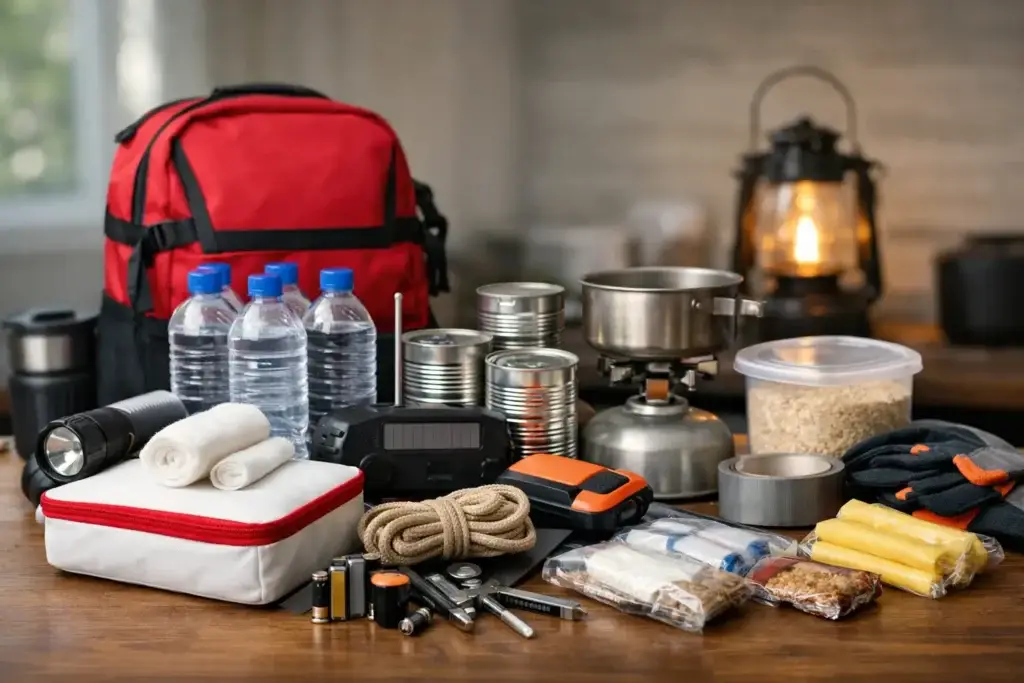
A disaster does not wait for a convenient Saturday afternoon. A wildfire evacuation order can arrive at dinner. Floodwater can cut off the road before sunrise. An ice storm can leave your family without heat, light, or safe water for days. The best disaster supplies are the ones already in your home, packed, tested, and easy to grab before the situation turns urgent.
Do not build a kit around vague promises that you will “make do.” Build it around the problems disasters actually create: no drinking water, no power, no communication, injuries, smoke or contaminated air, damaged roads, and a fast evacuation. Start with the essentials every household needs, then add gear for the hazards most likely where you live.
The Best Disaster Supplies Start With Water
Water is the first supply that becomes critical. Municipal systems can lose pressure, wells can stop working during outages, and floodwater is never safe to drink. Store at least one gallon of water per person per day for three days, with more if you have the space. A household of four needs at least 12 gallons for a basic 72-hour supply.
Stored water is your first layer of protection. Your second layer is the ability to make questionable water safer if your stored supply runs low. Keep a water filter designed for emergency use, purification tablets, and a clean container for collecting water. These tools are not interchangeable. Filters can remove many contaminants and particles, while chemical treatment can help with microorganisms. Neither makes chemical spills or floodwater automatically safe.
If you have infants, older adults, pets, or a family member with a medical condition, increase your water reserve. Heatwaves and gastrointestinal illness can make the standard minimum inadequate.
Food That Works When the Grid Is Down
Emergency food should require little or no preparation. Choose shelf-stable foods your family will actually eat: canned proteins, ready-to-eat meals, nut butter, crackers, cereal, dried fruit, energy bars, and shelf-stable milk if it fits your household. Include a manual can opener. A pantry full of canned food is useless if the only opener is electric.
Plan for at least three days, but aim for one to two weeks of food at home if storms, wildfire closures, or winter conditions regularly disrupt travel in your area. Rotate food before it expires, and do not rely on salty foods alone. They increase thirst when water may be limited.
If you store a camp stove, use it outdoors only and keep fuel in the proper container. Never bring charcoal grills, propane heaters not rated for indoor use, or fuel-burning camp stoves inside. Carbon monoxide poisoning can turn a power outage into a fatal emergency.
Light, Power, and Communication Supplies
When the power fails, darkness creates avoidable hazards. Keep several LED flashlights, headlamps, spare batteries, and battery-powered lanterns. Headlamps are especially useful because they leave both hands free for first aid, carrying children, or moving through a dark house.
A portable power station can keep phones, medical devices, lights, and small electronics running, but capacity matters. Check the wattage and runtime before you depend on one. A small unit may recharge phones many times but may not run a refrigerator, space heater, or sump pump for long. Households that rely on CPAP machines, refrigerated medication, mobility equipment, or an electric well pump need a more detailed backup-power plan.
Keep a battery-powered or hand-crank emergency radio for weather alerts when cellular networks are overloaded or internet service is down. Add charging cables, car chargers, a power bank, and a printed contact list. Phones fail, passwords are forgotten, and a child may need to reach a relative from someone else’s device.
| Supply category | What it protects against | What to check before buying | |—|—|—| | Headlamp or flashlight | Falls, dark evacuations, nighttime outages | Battery type, brightness, spare batteries | | Portable power station | Dead phones and essential small devices | Watt-hours, output ports, medical-device needs | | Emergency radio | Lost alerts and disrupted communications | NOAA weather alerts, battery and crank options | | Battery smoke and carbon monoxide alarms | Fire and fuel-burning appliance hazards | Battery life and placement in sleeping areas |
Medical, Sanitation, and Personal Protection
A basic first-aid kit is not enough if it contains only adhesive bandages and expired ointment. Build a kit that can handle cuts, burns, blisters, sprains, and minor bleeding while help is delayed. Include sterile gauze, medical tape, antiseptic, gloves, tweezers, pain relievers, burn dressings, a thermometer, and instructions for medications or conditions in your household.
Keep at least a week of essential prescription medication when possible. Speak with your pharmacist or clinician about emergency refill options before a storm is approaching. Add copies of prescriptions, insurance information, and key medical details in a waterproof pouch.
Sanitation becomes a health issue quickly when water service is interrupted. Store toilet paper, hand sanitizer, soap, disinfecting wipes, trash bags, and sturdy disposable gloves. For prolonged outages or evacuations, a portable toilet solution and waste bags may be necessary.
N95 masks belong in many home kits, particularly in wildfire regions, earthquake zones, and areas where storms can leave dust, mold, or debris in the air. Buy masks that fit the people who will use them. A mask that stays in its package because it is uncomfortable or too large does not protect anyone.
Build an Evacuation Go-Bag Before You Need It
Your home supplies protect you when you can shelter in place. A go-bag protects you when leaving is the safer choice. Every household member should have a bag that can be carried easily, including children who are old enough to carry a small backpack.
Pack three days of water, food, medication, a change of clothes, toiletries, a flashlight, a phone charger, copies of documents, cash in small bills, and a whistle. Keep car keys, eyeglasses, pet supplies, and sturdy shoes near the exit. For wildfire, add N95 masks and protective eyewear. For flood-prone areas, put documents, electronics, and medication in waterproof bags.
Do not wait for an order to begin packing. Once evacuation warnings start, stores empty, roads clog, and stress causes mistakes. Your bag should be ready now, with seasonal updates for cold weather, heat, and changing family needs.
Add Supplies for Your Most Likely Disaster
The best disaster supplies are not identical in every ZIP code. A family on the Gulf Coast needs flood protection and hurricane-ready evacuation gear. A household near forests needs smoke protection, defensible-space tools, and fast evacuation readiness. A northern home needs safe cold-weather backup plans, not just candles and canned food.
For flooding and hurricanes, add waterproof bags, plastic sheeting, sandbags or water barriers where appropriate, rain gear, and a battery-operated sump-pump backup plan if your home depends on one. Move documents and critical supplies above expected flood level. Never count on driving through water to reach a store or escape route.
For wildfires, keep N95 masks, goggles, a fire extinguisher, long-sleeved clothing, and a vehicle kit with maps and extra water. Smoke can travel far beyond the fire line, so indoor air protection and evacuation readiness both matter.
For earthquakes, secure heavy furniture and water heaters before the shaking starts. Store shoes, gloves, a flashlight, and a whistle near beds. After a major quake, broken glass, gas leaks, and blocked exits can be as dangerous as the shaking itself.
For winter storms, add blankets or sleeping bags, warm layers, insulated gloves, tire traction supplies, and safe backup heat. If you use a generator, operate it outdoors and well away from doors, windows, and vents. A generator is valuable only when carbon monoxide does not enter the home.
For extreme heat and long outages, prioritize water, electrolyte options, battery-powered fans, cooling towels, window coverings, and a plan to reach an air-conditioned location if indoor temperatures become dangerous. Older adults, infants, and people with chronic conditions need special attention.
Store Supplies So They Are Useful
Supplies hidden in a hard-to-reach attic are not emergency supplies. Keep your main kit in a cool, dry, accessible place. Use clear bins or labels so another adult can find water treatment, first aid, lighting, and evacuation items without searching.
Review the kit twice a year. Replace expired food, medications, batteries, and water. Test the radio, recharge power stations, update documents, and make sure clothing still fits growing children. This is also the time to ask whether your plan accounts for pets, grandparents, mobility needs, and the neighbors who may need help.
Preparedness is not about predicting the exact disaster. It is about refusing to leave your family exposed when basic systems fail. Start with water, light, medical care, and a ready go-bag, then close the gaps created by the hazards outside your door. The worst day hits fast. Prepare faster.