
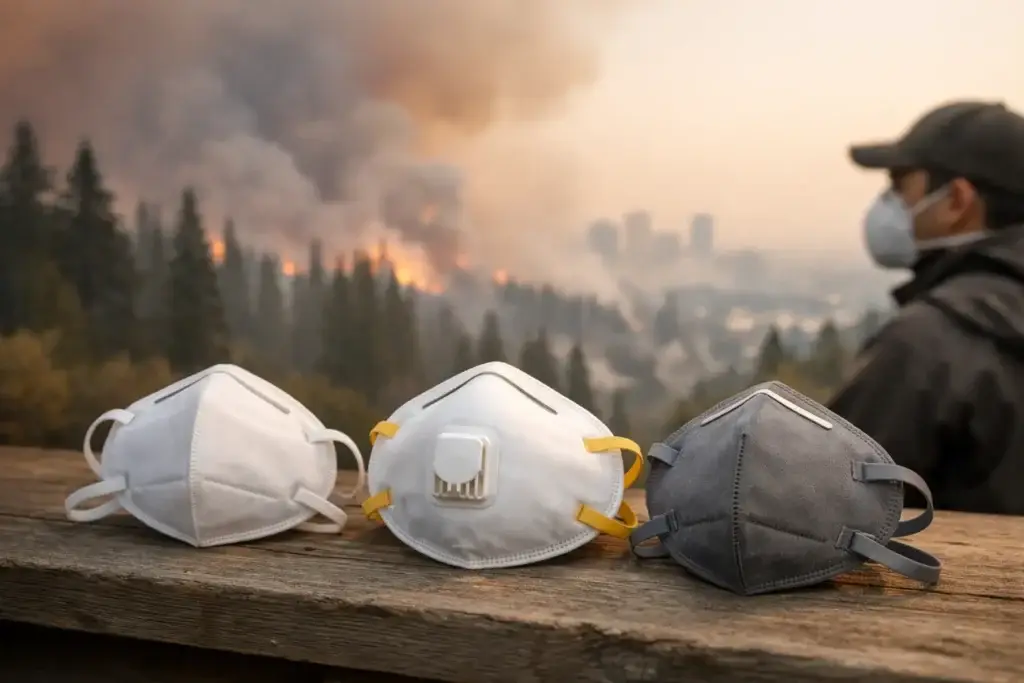
Wildfire smoke can turn familiar air into a health threat in hours. If smoke season is part of life where you live, finding the best n95 mask for wildfire smoke is not a last-minute shopping decision. The mask that protects your family is the one that is genuine, fits tightly, stays comfortable long enough to wear, and is already in your emergency supplies before the Air Quality Index climbs.
An N95 is not a substitute for getting indoors, closing windows, or using a properly sized air cleaner. But when you must evacuate, work outside, drive through smoke, care for animals, or enter a smoky building, it is one of the most important pieces of protective gear you can own.
What Makes the Best N95 Mask for Wildfire Smoke?
The right choice begins with one non-negotiable detail: buy a NIOSH-approved N95 respirator. NIOSH, the National Institute for Occupational Safety and Health, tests and approves respirators that meet filtration and performance standards. A real N95 filters at least 95% of certain airborne particles when it is fitted and worn correctly.
Wildfire smoke contains fine particulate matter, commonly called PM2.5. These particles are small enough to reach deep into the lungs and can aggravate asthma, heart disease, and other health conditions. An N95 is designed to filter particles. It does not remove gases, vapors, or every odor from smoke. If you smell smoke through the mask, that does not automatically mean it has failed, but it is a reminder that filtering particles is only one part of smoke protection.
The best model depends on your face, your evacuation plan, and how long you may need to wear it. A less expensive respirator that seals well is safer than a premium one that leaves gaps along your cheeks or nose.
Choose a trusted NIOSH approval
Look for clear markings on the respirator or packaging, including “NIOSH,” “N95,” and an approval number beginning with “TC-84A.” The manufacturer’s name should also be visible. Counterfeit masks often use vague claims such as “N95 style,” “N95 equivalent,” or “95% filtration” without a real approval marking.
Do not assume a disposable mask is an N95 because it is white, cup-shaped, or sold in a hardware store. Surgical masks, cloth masks, dust masks without NIOSH approval, and many fashion masks may reduce larger droplets or nuisance dust, but they are not dependable protection against wildfire PM2.5.
Prioritize the seal, not just the filter
Air follows the easiest path. If a respirator has gaps near the nose, chin, or sides of the face, smoky air can bypass the filter. That is why fit matters as much as the N95 rating.
For many adults, a molded cup-style N95 with two headbands provides a secure, durable seal. Fold-flat N95s can be easier to store in a go-bag and often work well for people who find rigid cup masks uncomfortable. Some models include a foam nose cushion or adjustable nose clip, which can help prevent leaks and reduce fogging for people who wear glasses.
Ear-loop masks are convenient, but headbands generally create a more reliable seal for prolonged wildfire smoke exposure. If you will be driving, evacuating, or working outdoors for hours, choose the design you can keep properly positioned without constant adjustment.
Avoid exhalation valves for evacuation settings
Some N95 respirators have an exhalation valve that makes breathing out feel cooler and easier. They may be useful for certain outdoor tasks when smoke is the only concern. But the valve does not filter exhaled air, so it is a poor choice around medically vulnerable people, in shelters, clinics, or crowded evacuation spaces where respiratory illness may be circulating.
For household readiness, a valveless N95 is the more flexible default. It protects the wearer from particles and helps reduce what the wearer releases into shared indoor spaces.
N95 Styles Compared for Wildfire Readiness
| N95 style | Best use | Main advantage | Watch for | |—|—|—|—| | Cup-style with headbands | Outdoor work, evacuation, extended wear | Usually firm and stable on the face | Takes more storage space | | Fold-flat with headbands | Go-bags, vehicles, travel | Compact and easy to pack in quantity | Fit varies widely by face shape | | N95 with foam nose cushion | People prone to nose leaks or glasses fogging | Can improve comfort and seal | Cushion does not replace proper fitting | | Valved N95 | Short-term outdoor tasks only | Cooler exhalation | Not appropriate for shelters or shared indoor settings |
No single shape fits every person. Buy a small number of several NIOSH-approved styles before fire season, then have each adult try them in clean air. This is not wasted gear. A mask test at the kitchen table is far better than discovering a poor fit while ash is falling and evacuation orders are active.
How to Check an N95 Before You Need It
Put the respirator on with clean hands. Position it over your nose and under your chin. Use both headbands if the model has them: one high on the back of the head and one below the ears around the neck. Do not cross the bands or wear them loosely.
Shape the nose clip using both hands, pressing from the bridge of the nose outward. Then check the seal. Cover the respirator with both hands without crushing it and inhale sharply. The mask should pull slightly toward your face. If you feel air leaking around the nose, cheeks, or chin, reposition it or try another model.
Facial hair can prevent a dependable seal. Stubble, beards, and even some sideburn patterns can create channels where unfiltered air enters. If wildfire smoke may force you outside, household members who rely on N95 protection should plan accordingly. This can be an uncomfortable preparedness conversation, but smoke does not wait for convenient timing.
Replace a disposable N95 when it becomes wet, dirty, damaged, difficult to breathe through, or visibly misshapen. Do not wash it. Do not share it. Store unused respirators in a clean, dry location away from direct sun, chemical fumes, and crushing weight.
Plan for Children, Older Adults, and Medical Needs
Adult N95s are not designed to fit small children. A loose respirator on a child can provide false confidence while allowing smoke around the edges. For children, the first defense is keeping indoor air clean and limiting outdoor exposure. If you need child-sized respiratory protection, seek a product specifically designed for children and follow its age and fit guidance carefully.
Older adults and people with asthma, COPD, heart disease, or other breathing conditions may find an N95 uncomfortable, especially in heat or during physical activity. They should speak with a health professional ahead of smoke season about when and how to use respiratory protection. An N95 can make breathing feel harder. It is not a reason to push through severe symptoms, heavy smoke, or an unsafe evacuation route.
Keep rescue inhalers, prescriptions, medical information, and a backup supply of masks together in the go-bag. A respirator is only useful if it is available when you leave.
How Many N95s Should Your Household Store?
Do not buy one box and call the job done. Store enough for every household member who can safely use an N95, plus extras for damaged masks, visitors, neighbors, and repeated smoke events.
A practical starting point is at least 10 to 20 disposable N95s per adult for each wildfire season, with more if anyone works outdoors, cares for livestock, or may need to return home after an evacuation. Keep some in the home emergency kit, several in each vehicle, and a few in every evacuation go-bag. Place them in a sealed bag or rigid container so they do not get crushed beneath water, food, or tools.
Check your supply before the season begins. Wildfire emergencies trigger shortages quickly, and the wrong time to compare mask fit is when store shelves are empty.
Do Not Let the Mask Become Your Entire Smoke Plan
The best N95 is a layer of defense, not permission to remain in dangerous conditions. When smoke moves in, monitor local alerts, stay indoors when possible, close doors and windows, and run a clean-air room with an appropriate air purifier if you have one. Avoid activities that add indoor particles, such as burning candles, frying food, or vacuuming with equipment that does not capture fine dust.
If officials issue an evacuation order, leave when instructed. Do not wait for visible flames to make the decision for you. Pack N95s with your medications, water, documents, radio, and emergency power supplies so your family can breathe easier during the move.
A wildfire can change direction overnight. Put tested, NIOSH-approved N95s where your family can reach them now, because the worst day hits fast and prepared households move faster.