
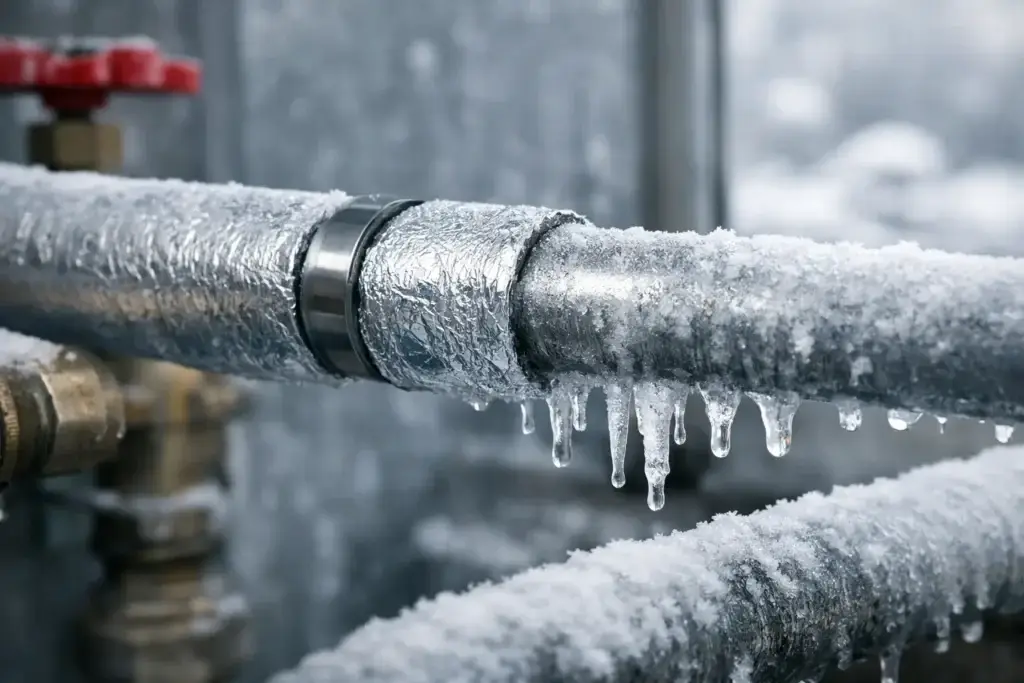
A hard freeze does not need much time to turn a small plumbing weakness into a flooded room. Water expands as it freezes, building pressure inside pipes until a fitting fails or the pipe splits. The danger is often hidden: a pipe can freeze overnight, then leak only after temperatures rise. Knowing how to protect pipes from freezing before the forecast turns severe can prevent thousands of dollars in damage and keep your family from losing water when conditions are already dangerous.
Winter storms also bring power outages, blocked roads, and delayed repair crews. Do not assume you can buy supplies or call a plumber after the cold arrives. Protect the pipes now, identify your shutoff valve, and prepare for the possibility that heat and running water will both be limited.
Why pipes freeze and where homes fail first
Pipes freeze when the water inside drops to 32°F or below, but outdoor temperature is only part of the risk. Wind strips heat from exposed pipes. Gaps around utility openings let cold air into cabinets and crawl spaces. A thermostat setback that is harmless in ordinary weather can be enough to freeze a vulnerable line during a multi-day cold snap.
The highest-risk pipes are usually near exterior walls, in unheated basements, crawl spaces, garages, attics, and under kitchen or bathroom sinks. Mobile homes and older houses deserve extra attention because insulation, skirting, and pipe routing may be less forgiving. A home that has never had a frozen pipe can still fail during an unusual Arctic blast or a long power outage.
Frozen pipes are not only a homeowner problem. Renters should protect accessible plumbing, report drafts or failing heat promptly, and know how to reach building management. Landlords may be responsible for major repairs, but fast action can still protect your belongings and prevent water from spreading through your unit.
How to protect pipes from freezing before the cold hits
Start outside, where easy seasonal tasks can remove major risks. Disconnect garden hoses, drain them, and store them indoors. Shut off water to outdoor spigots if your home has interior shutoff valves for them, then open the spigots to drain trapped water. If you have frost-free hose bibs, disconnecting hoses still matters. A connected hose can hold water against the fixture and allow freezing damage.
Insulate exposed water pipes in unheated areas with foam pipe sleeves or pipe wrap. Focus on straight runs, elbows, joints, and pipes close to exterior walls. Insulation slows heat loss, but it does not create heat. In severe or prolonged cold, combine it with a heat cable or heat tape rated for plumbing use and installed exactly according to the manufacturer’s instructions. Never overlap heating cable unless the product specifically permits it, and do not use damaged cords or improvised electrical connections.
Seal obvious air leaks around pipe penetrations, foundation openings, dryer vents, and gaps under doors to garages or crawl spaces. Use appropriate caulk, weatherstripping, or insulation for the location. The goal is to stop cold air from reaching plumbing, not to seal off ventilation that combustion appliances need. If you are unsure whether an opening serves a furnace, water heater, or other fuel-burning appliance, get qualified advice before closing it.
Keep indoor heat consistent. Set the thermostat no lower than 55°F if you are away, and do not turn it down aggressively at night during a hard freeze. That small energy saving can become an emergency repair bill. Close garage doors, especially if water lines run through an attached garage, and keep interior doors open where warm air needs to circulate.
Under sink cabinets on exterior walls, open the doors during freezing weather so conditioned air can reach supply lines. Remove household chemicals and anything dangerous to children or pets first. If the sink is in a drafty cabinet, a small amount of safe airflow often makes a meaningful difference.
When to let faucets drip
During a brief light freeze, a well-insulated, heated home may not need dripping faucets. During sustained temperatures in the 20s or below, especially if pipes have frozen before, let vulnerable faucets run at a slow, steady trickle. Run both hot and cold water if both lines are exposed. Moving water is harder to freeze, and an open faucet can relieve pressure if ice starts forming.
Do not mistake a drip for complete protection. A faucet left running cannot compensate for a failed furnace, an open crawl-space vent, or an uninsulated pipe exposed to wind. Treat it as one layer in a larger plan.
Prepare for a winter power outage
A power outage changes the equation fast. Electric heat stops immediately, and gas furnaces often need electricity for controls and blowers. If your home loses heat, the temperature near exterior pipes can fall far below the reading on your thermostat.
Build a cold-weather home readiness kit before storm season. Keep these supplies where you can reach them without searching in the dark:
- Foam pipe insulation, approved heat cable, and weatherstripping for last-minute repairs.
- A battery-powered weather radio, flashlights, spare batteries, and phone power banks to track warnings and communicate.
- A portable power station or properly installed backup power option sized for essential needs, not just convenience.
- Bottled water or stored potable water, because protecting pipes does not guarantee uninterrupted water service.
- Towels, buckets, a wet/dry vacuum if available, and heavy-duty plastic sheeting to contain a leak quickly.
Portable generators must stay outdoors, far from doors, windows, and vents. Never run one in a garage, basement, or enclosed porch. Carbon monoxide can kill without warning. If you rely on a generator for heat or plumbing protection, test it before winter and store fuel safely according to local rules.
If you leave home during freezing weather, do not simply turn off the heat and hope for the best. Keep the home heated, arrange for someone to check it after a major outage, and consider shutting off the main water supply and draining the system if the property will be unoccupied without reliable heat. This choice depends on your plumbing layout and whether your heating system requires water. When in doubt, consult a licensed plumber before a long winter absence.
Know your main water shutoff valve
Every responsible adult in the household should know where the main water shutoff valve is and how to operate it. It may be in a basement, utility room, garage, crawl space, or near the water meter. Test that it turns before an emergency, but do not force a corroded valve. Tag it clearly and keep the access area clear.
Also locate the electrical panel and any fuel shutoffs relevant to your home. A burst pipe near electrical equipment can create more than water damage. Your first job is to stop the flow safely, then protect people from slipping, electrical shock, and cold exposure.
What to do if a pipe freezes
A frozen pipe may show up as no water, weak flow, frost on a visible pipe, or an unusual bulge. Act early. Keep the faucet open so melting ice can release pressure, then warm the pipe gradually using room heat, an electric heating pad, a hair dryer, or towels soaked in warm water. Begin near the faucet and work toward the suspected frozen area.
Never use an open flame, propane torch, charcoal grill, or kerosene heater to thaw pipes. Fire, carbon monoxide, and cracked plumbing are not acceptable trade-offs. Do not use electrical appliances near standing water.
If you cannot find the frozen section, if the pipe is behind a wall, or if it has already cracked, shut off the main water supply and call a licensed plumber. Check nearby ceilings, walls, cabinets, and floors as thawing begins. Leaks may appear after water flow returns.
A frozen pipe is a warning, not bad luck. Mark the vulnerable location, improve insulation and air sealing, and make the repair before the next storm. The worst day hits fast. Prepare faster, while your home is warm, dry, and still under your control.