
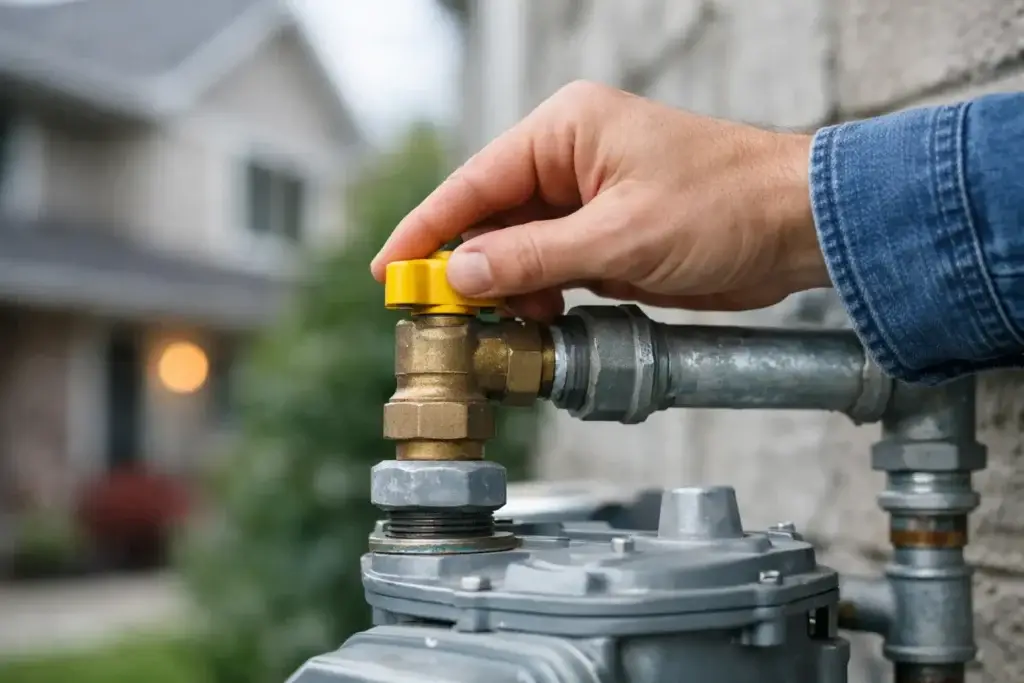
A gas leak does not wait for a convenient moment. After an earthquake, wildfire, flood, or severe storm, one damaged line can turn a shaken house into a fire or explosion hazard. Knowing how to shut off gas is a practical skill that can protect your family – but only if you locate the right valve and understand when it is safe to use it before disaster strikes.
Do not wait until you smell rotten eggs, hear a hiss, or see damage around your meter. Find your shutoff point now, practice identifying it with every adult in your household, and keep the right tool where it belongs.
When should you shut off gas?
The main gas supply should not be shut off casually. Once it is off, your utility company or a qualified professional may need to restore service, relight appliances, and confirm that the system is safe. In some areas, turning gas back on yourself can be dangerous or prohibited.
Shut off the main gas supply when there is a credible risk that the gas line has been damaged or is leaking. That can include a strong earthquake, visible damage to a gas meter or piping, a confirmed leak, or instructions from emergency officials or your gas utility.
If you smell gas, hear a blowing or hissing sound near a line or appliance, see a damaged meter, or suspect a leak, your first job is to get people away from the building. Do not search for the source. Do not try to be a hero with a wrench while gas may be collecting around you.
Leave immediately, move well away from the home, and call 911 and your gas utility from a safe location. Do not use a phone inside the house. Do not turn lights, appliances, fans, or electronics on or off. Do not light a match, smoke, start a vehicle nearby, or use an open flame. A tiny spark can ignite leaking gas.
Find your main gas shutoff valve now
For most homes supplied by natural gas, the main shutoff valve is located at the gas meter. The meter is usually outside, near the front or side of the home, though some older homes have meters in a basement, utility room, garage, or exterior cabinet.
Look for the pipe running from the meter toward your home. The shutoff valve is commonly a rectangular metal tab or lever on that pipe, close to the meter. It is not the same as the smaller shutoff valves behind your stove, water heater, furnace, or fireplace. Those appliance valves stop gas to one appliance. The meter valve stops gas entering the house.
Your meter setup may look different from your neighbor’s. Snow, landscaping, stored items, locked gates, and outdoor furniture can all delay access when seconds matter. Keep the meter area visible and reachable. If you cannot confidently identify the valve, contact your gas utility before an emergency and ask for guidance on your specific setup.
Know the valve position
On many natural-gas meters, the valve is open when its tab is parallel with the pipe. Turning the tab one-quarter turn until it sits perpendicular to the pipe closes the gas flow.
That rule is common, not universal. Valve designs vary. Do not force a valve that will not move, and do not tamper with utility locks, seals, regulators, or equipment you do not recognize. Take a clear photo of your meter and valve today, then label the location in your household emergency plan.
How to shut off gas at the meter
Only attempt this if you are outside, conditions are safe enough to approach, and you have a valid reason to stop the gas supply. If there is active fire, a strong gas odor, sparking, downed power lines, floodwater, or structural collapse near the meter, stay back and call emergency responders.
Use an adjustable wrench or a purpose-made gas shutoff wrench that fits your valve. Place it over the valve tab and turn it one-quarter turn until the tab is perpendicular to the pipe. Do not keep turning. The goal is a 90-degree turn, not removal or disassembly.
Afterward, leave the area if you suspect a leak. Do not go indoors to check whether the gas is off. Do not test the line with a flame. Let the utility company, fire department, or qualified technician inspect the system.
Most households should store the gas wrench in a clearly marked outdoor emergency kit or mounted near the meter, where it can be reached without entering a damaged home. Avoid leaving it loose where children can use it or where it can disappear under yard equipment.
Do not turn the gas back on yourself
This is where costly mistakes happen. Turning a main valve back on can allow gas into damaged pipes or appliances, and pilot lights may need professional relighting. A home can appear intact after an earthquake or storm while a hidden line, connector, or appliance fitting has failed.
Call your gas utility or a licensed professional to restore service. They can check for leaks and ensure appliances are operating safely. The inconvenience of waiting for restoration is minor compared with the risk of fire, explosion, carbon monoxide exposure, or serious injury.
If an official evacuation order is issued, follow the instructions provided for your area. Some agencies may tell residents to shut off utilities; others may specifically advise against it unless a leak is suspected. Local conditions and utility systems matter. Follow the directions from emergency management, fire officials, and your gas provider rather than relying on one-size-fits-all advice.
Special situations: earthquakes, fires, floods, and propane
After a significant earthquake, check from a safe distance for gas odor, hissing, damaged piping, or a shifted meter. If any of these signs are present, shut off gas only if you can safely reach the valve, then evacuate. If there are no signs of a leak and local officials have not directed otherwise, leaving the gas on may prevent unnecessary service interruptions.
During a house fire or wildfire threat, do not approach a meter near flames, heat, smoke, or falling debris. Call 911. Firefighters may shut off utilities when it is safe. Your priority is evacuation, not utility work.
Flooding creates another dangerous trade-off. Never enter standing water to reach a gas meter, especially if power may still be active. Water can hide electrical hazards, undermine the ground around equipment, and carry debris. Report the situation from a safe place and wait for utility guidance.
Propane systems are different. If your home uses a propane tank, the main shutoff is typically a handwheel or valve at the tank. Closing it generally requires turning the valve clockwise. Do not disconnect lines, move the tank, or attempt repairs. A propane leak often has a strong odor and may settle in low areas because propane is heavier than air. Leave immediately and call emergency services and your propane supplier from a safe distance.
Put the right gas-safety tools in place
Preparedness fails when equipment is buried in a garage, missing, or unusable during a blackout. Build a small utility-shutoff setup before the next emergency. Keep these items together in a known, accessible location:
- An adjustable wrench or meter-specific gas shutoff wrench
- A permanent marker and weather-resistant label for the meter location
- Heavy work gloves and sturdy closed-toe shoes
- Flashlights or headlamps with spare batteries – never candles
- A battery or hand-crank emergency radio for official instructions
- Printed emergency contacts for your gas utility, propane provider, and local emergency services
Also make sure every responsible adult knows where the wrench is stored. Walk them to the meter. Show them the valve. Explain that a gas smell means leave first, call second, and only shut off gas if it can be done without entering danger.
Practice before the worst day
A five-minute household drill can remove confusion when fear is high. Stand outside at the meter with your family, identify the main valve, confirm the wrench fits, and review the evacuation meeting place. Include renters: you may not own the property, but you still need to know how to get out safely and who to call.
Do not wait for shaking ground, smoke on the horizon, or the smell of gas to learn what protects your home. Find the valve today, keep the tool ready, and make sure your family knows that getting out alive always comes before shutting anything off.