
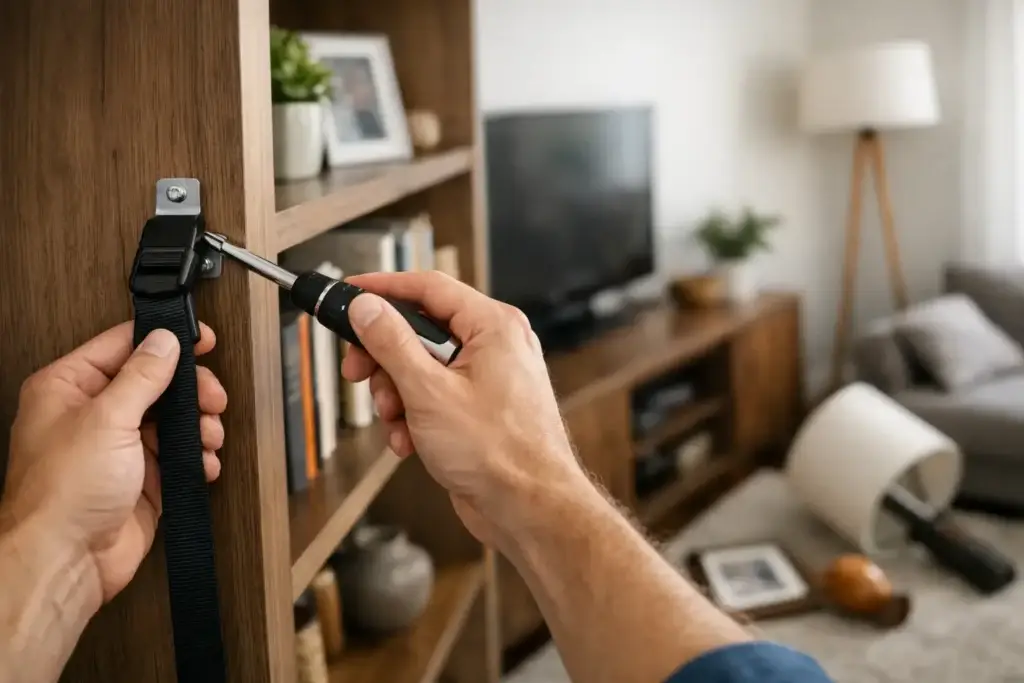
The bookcase beside your child’s bed, the television above the console, and the tall cabinet packed with dishes can become crushing hazards in seconds. Knowing how to secure furniture for earthquakes is not a cosmetic home project. It is a direct step to keep heavy objects from falling, blocking exits, or injuring the people you are responsible for protecting.
Earthquake shaking does not give you time to brace a cabinet or catch a television. The work has to be done before the first jolt. Start with the furniture that can fall on a bed, sofa, desk, crib, or the path your family would use to get out.
Why unsecured furniture is dangerous in an earthquake
During an earthquake, the floor moves beneath furniture while the upper portion of a tall or heavy item lags behind. That force can make bookcases, armoires, dressers, display cabinets, refrigerators, and televisions tip forward or slide across the room. Even moderate shaking can throw loose objects from shelves and turn glassware, tools, and framed pictures into debris.
The greatest risk is not always the heaviest piece in the house. A narrow, top-heavy bookcase loaded with books can tip faster than a low, solid cabinet. A large flat-screen TV can fall with enough force to cause severe injury. A tall dresser in a bedroom is especially dangerous because people may be asleep, disoriented, or trying to protect children when shaking begins.
Treat every tall, heavy, or wall-mounted item as a potential hazard until it is secured. If it can tip, slide, fall, or spill, it belongs on your earthquake preparation list.
How to secure furniture for earthquakes, room by room
Do not try to anchor everything at random. Walk through your home and prioritize the rooms where people sleep, spend the most time, or store essential emergency supplies. Bedrooms, living rooms, kitchens, nurseries, and hallways should come first.
Bedrooms and nurseries
Move beds, cribs, and changing tables away from windows, mirrors, heavy wall art, and tall furniture whenever the layout allows. Never place a crib under a shelf or next to an unsecured bookcase. If a dresser must remain near a bed, anchor it to wall studs with furniture safety straps or L-brackets rated for the item’s weight.
Use two attachment points for tall furniture whenever possible. A single strap may reduce movement, but two properly installed straps offer better resistance against twisting and tipping. Keep the dresser drawers closed and avoid loading the highest drawers with heavy items. Weight should stay low, with lighter clothing or linens stored higher up.
Living rooms and family areas
Secure televisions to the wall with a mount rated for the TV’s size and weight, or use anti-tip straps if the television sits on a stand. The stand itself may also need anchoring. Do not assume a wide entertainment console makes the setup safe. A television can slide or topple even when its base looks stable.
Anchor bookcases, curio cabinets, hutches, and tall storage units into wall studs. Move heavy books, speakers, decor, and framed items from high shelves to lower shelves. Use positive latches on cabinet doors that contain glass, collectibles, or heavy equipment so the doors do not swing open during shaking.
If you have a large mirror leaning against a wall, mount it properly or move it out of high-traffic areas. Leaning mirrors and oversized wall art are common but preventable hazards.
Kitchens and dining areas
The kitchen can become one of the most dangerous rooms after a strong earthquake. Cabinet doors can fly open, dishes can shatter, and heavy appliances can shift. Install cabinet latches on upper cabinets, especially those holding plates, glasses, cookware, and pantry jars. Use shelf lips, tension rods, or non-slip liners to help keep contents from launching forward.
Anchor freestanding shelving and tall pantries. Store canned goods, cast-iron cookware, small appliances, and glass containers on lower shelves. A little rearranging now can prevent a blocked kitchen floor and reduce the chance of broken glass when your family needs food, water, and first-aid supplies.
For a freestanding refrigerator, use an appliance restraint system designed to limit forward movement. Keep a clear path around it. In a major event, a shifted refrigerator can block the route to water, food, or an exit.
Home offices, garages, and utility spaces
Secure filing cabinets, tall storage racks, workshop cabinets, and freestanding tool chests. Lock cabinet drawers and use drawer latches where available. In garages, place heavy bins and tools on lower shelves and use straps or retaining bars across open shelving.
Do not store paint, fuel, chemicals, batteries, or other hazardous products on high shelves. Earthquake preparation is not only about preventing impact injuries. It is also about preventing spills, fires, and dangerous fumes after the shaking stops.
Choose the right anchors and hardware
The right restraint depends on the furniture, wall construction, and whether you own or rent your home. Avoid relying on adhesive-only restraints for heavy furniture. Adhesive products may be useful for small decor, but they are not a substitute for screws driven into a wall stud or approved masonry anchors.
For most dressers, bookcases, and cabinets, furniture anti-tip straps are the practical choice. They attach to the upper back of the item and to a wall stud. Metal L-brackets can also work well for furniture that sits flush against the wall, but they may be more visible and can limit how easily the piece can be moved later.
Use earthquake-rated TV mounts for wall-mounted televisions. For large mirrors, artwork, and wall decor, use closed hooks or security hangers rather than open picture hooks. Open hooks can let an item bounce free during sharp vertical or side-to-side movement.
Here is a practical match between common hazards and the equipment that helps control them:
| Household hazard | Best securing method | Why it matters | |—|—|—| | Tall dresser or bookcase | Two anti-tip straps into wall studs | Reduces forward tipping and twisting | | Television on a stand | TV safety straps or rated wall mount | Prevents a heavy screen from toppling | | Kitchen cabinets | Positive cabinet latches | Keeps dishes and glassware contained | | Open garage shelving | Retaining bars or straps | Stops bins and tools from falling forward | | Framed art and mirrors | Closed security hooks | Helps prevent items from jumping off hooks |
Install anchors correctly or they will fail when needed
An anchor is only as strong as what it is attached to. The most reliable installation is typically into a wall stud, not just drywall. Use a stud finder, mark the stud location, and follow the hardware manufacturer’s instructions for screw size, weight rating, and placement.
Attach the furniture connection near the top of the piece, where it has the most leverage against tipping. Do not attach a strap to a thin back panel, decorative trim, or a weak particleboard edge. Look for a solid structural section of the furniture frame. If you are unsure, check the manufacturer’s instructions or choose a restraint kit designed for that furniture type.
Concrete, brick, and plaster walls require different anchors than standard drywall. Renters should not skip this project because of lease concerns. Ask the property owner for permission to install safety restraints, or use approved solutions that can be removed and repaired later. A few small repairable holes are a far better outcome than an avoidable injury.
After installation, test each item. Pull the upper portion of the furniture forward with steady pressure. It should resist movement without the strap loosening, screws shifting, or hardware bending. Inspect restraints annually and after moving furniture, repainting, remodeling, or replacing a television.
Reduce the hazards anchors cannot solve
Furniture straps are essential, but they are only one part of a safer home. Earthquake readiness also means removing the dangerous items that can fall from secured furniture. Keep heavy objects low, use non-slip pads beneath lamps and small appliances, and add museum putty or quake gel for lightweight decor that could slide off a shelf.
Keep exits clear. Do not place tall furniture, shoe racks, storage bins, or large mirrors where they could block bedroom doors or hallways if they shift. Your family may need to leave in darkness, amid dust, broken glass, and aftershocks.
Put shoes, flashlights, and a basic emergency kit near sleeping areas. A battery-powered emergency radio, first-aid supplies, water, N95 masks, and work gloves should be accessible without entering a room filled with unstable furniture or shattered glass. If your home experiences strong shaking, do not rush back inside to retrieve gear. Prepare it where you can reach it safely.
Make this a one-day earthquake safety project
Start with the rooms where your family sleeps tonight. Identify every tall or heavy item, buy the correct anchoring hardware, and install it before moving to lower-priority areas. Take photos of completed restraints and note the installation date so you know what to inspect later.
The worst day hits fast. A secured dresser, cabinet, or TV will not solve every earthquake risk, but it can prevent the injury that changes your family’s life. Take action now, while the walls are still and every exit is clear.