
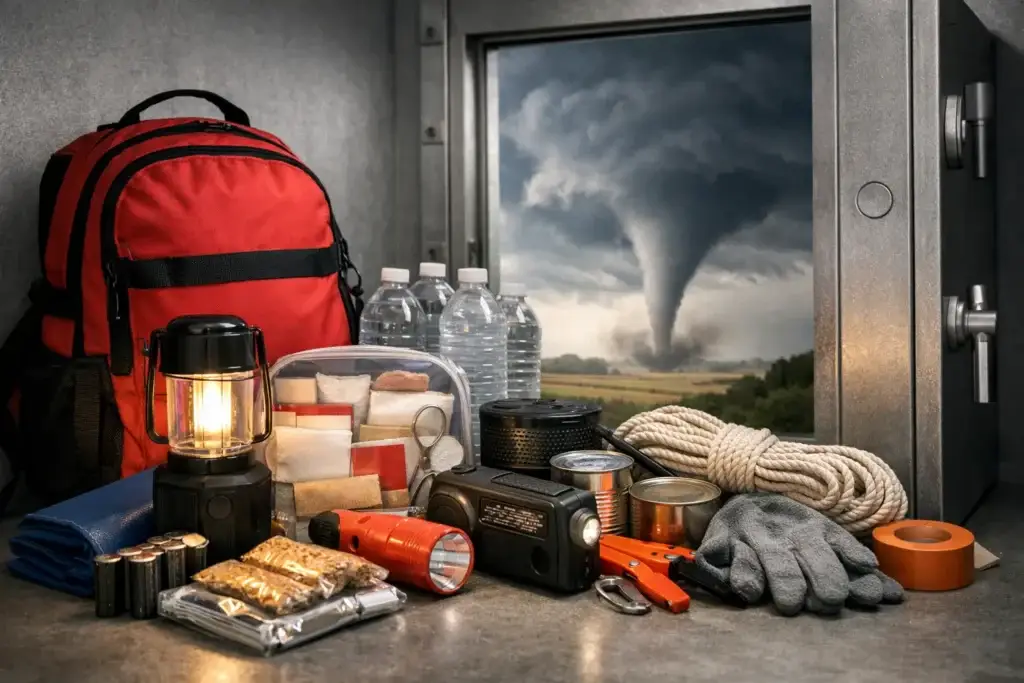
A tornado warning is not the time to hunt for flashlights, shoes, or a phone charger. When the sirens sound or a weather alert says to take shelter, minutes matter. A tornado safe room emergency kit puts the supplies your household may need within arm’s reach before wind, debris, power loss, and panic take control.
A properly built safe room protects you from the tornado itself. Your kit helps protect you during the hours that can follow: darkness, blocked exits, injuries, damaged utilities, interrupted communication, and a long wait for help. Do not assume you will walk out to an intact kitchen, garage, car, or medicine cabinet. Store the essentials where you shelter.
Why a tornado safe room emergency kit is different
A tornado kit is not simply a 72-hour evacuation bag placed in a closet. It has a narrower job: help everyone in the room survive an immediate violent event and function safely if the home is damaged afterward.
Space is the first trade-off. A safe room, reinforced storm shelter, or interior basement area can become crowded fast when adults, children, pets, and a few minutes of supplies arrive at once. Do not fill it with oversized bins that block the door, prevent people from sitting safely, or become dangerous projectiles. Use a sturdy, lidded container that fits the space, is easy to grab, and stays secured or low to the ground.
The kit also must be ready without advance notice. Tornadoes can develop quickly, and nighttime storms remove the advantage of seeing what is coming. Every item should be usable in the dark, by a stressed person, without a search through the rest of the house.
What to put in your tornado safe room emergency kit
Build around the hazards most likely to affect your family after sheltering: injury, darkness, dehydration, no phone service or power, and debris blocking normal movement. Start with the items below, then adjust for your household.
Water, food, and essential medication
Keep at least one gallon of water per person if your shelter can hold it, but use smaller individual bottles when space is limited. They are easier to distribute, less likely to spill, and simpler for children to use. Aim for a minimum 24-hour supply in the safe room, then maintain additional household water elsewhere for a longer disruption.
Add shelf-stable, ready-to-eat food that needs no cooking or much water. Protein bars, crackers, nut butter packets, dried fruit, and canned foods with pull tabs are practical choices. Avoid foods that are too salty unless you have sufficient water. Include a manual can opener only if you store cans that require one.
Keep a small supply of critical prescription medication, when possible, plus copies of prescriptions and dosage information in a waterproof pouch. Anyone who relies on insulin, oxygen, mobility equipment, or other medical needs should have a more specialized plan. A safe room kit cannot replace medical planning for power-dependent equipment, so discuss backup options with the appropriate provider before storm season.
Light, alerts, and communication
Store two or more LED flashlights, extra batteries, and a battery-powered or hand-crank NOAA weather radio. A radio is not outdated equipment. Cell networks can fail, phones can run down, and local broadcasts can provide instructions after a storm passes.
Add a fully charged power bank with the correct charging cables for your household’s phones. Check it monthly. Keep a paper list of emergency contacts, medical information, and meeting locations because a locked phone with a dead battery is not an emergency plan.
Headlamps are especially useful. They leave both hands free to hold a child, apply first aid, move debris, or guide someone through a dark home. Avoid candles. An open flame has no place near possible gas leaks, damaged wiring, or frightened children.
First aid and personal protection
Tornado injuries often come from flying glass, nails, splintered wood, and damaged buildings after the funnel has passed. Your kit should include a well-stocked first-aid kit, along with trauma-focused supplies such as sterile gauze, pressure dressings, adhesive bandages, antiseptic wipes, medical tape, disposable gloves, and a CPR face shield.
If you know how to use one, include a commercial tourniquet and keep it accessible. Severe bleeding requires fast action, not a hunt through a cluttered cabinet. Take a recognized first-aid or bleeding-control class before you need those skills.
Pack sturdy closed-toe shoes for each person, work gloves, safety glasses, and N95 masks. Broken glass and nails can cover the floor, while insulation, dust, and debris may make the air difficult to breathe. Shoes deserve special attention: many people shelter barefoot or in slippers, then must step into a damaged home. Keep shoes beside or inside the kit, not across the room.
Rescue, signaling, and sanitation supplies
Include a whistle for each person who can use one. If debris traps you or makes shouting difficult, a whistle helps rescuers locate you while preserving your voice. A loud personal alarm can also work, but it needs charged batteries.
A basic tool set should include a multi-tool, duct tape, a utility knife, and a small pry bar. These are for limited, careful use after the danger has passed. Do not turn a safe room into a tool shed, and do not attempt structural rescue work beyond your ability. If you suspect a gas leak, smell gas, see damaged electrical lines, or find major structural collapse, get to a safer location if possible and contact emergency services.
For sanitation, pack moist wipes, hand sanitizer, toilet paper, heavy-duty trash bags, and a small bucket with a tight lid if your household sheltering plan calls for it. These supplies become much more valuable if plumbing is damaged or you cannot safely leave the room right away.
Items for children, pets, and stress
Fear is not a minor issue during severe weather. For young children, include comfort items such as a small stuffed animal, a familiar book, quiet activity materials, and child-size hearing protection if thunder and sirens are overwhelming. Write each child’s name, birth date, allergies, and caregiver contact information on a waterproof card.
Pets need their own plan. Keep a leash, harness, carrier if space permits, collapsible bowl, water, food, waste bags, and copies of vaccination records near the shelter. Do not assume a scared pet will come when called as the warning begins. Practice moving them into the safe room.
Store the kit where it can actually save you
The best supplies are useless if the kit sits in an upstairs closet while your shelter is in the basement. Keep it inside the approved safe room or immediately beside the shelter entrance. If your designated area is a small interior bathroom or closet, use a compact backpack or wall-mounted container rather than a large tote.
Protect contents from moisture, heat, and pests. Waterproof bags are useful for documents, medications, batteries, and electronics. Label the container clearly so guests, babysitters, older children, and anyone helping your family can identify it quickly.
Do not store fuel, propane cylinders, gasoline, charcoal, or a generator in or near the safe room. Generators belong outdoors and far from doors, windows, and vents. Carbon monoxide can kill during the aftermath, when people are tired and tempted to take shortcuts.
Maintain it before storm season starts
A tornado safe room emergency kit is a living supply cache, not a one-time shopping project. Set a reminder at the start of spring and again in the fall to replace expired food and medication, inspect batteries, recharge power banks, update contact lists, and confirm shoes still fit growing children.
Practice your shelter routine at least twice a year. Time how long it takes to bring every person and pet into the safe room. If the answer is longer than a few minutes, remove obstacles and simplify the plan. During a warning, do not wait to see the tornado. Go to your safe room, bring the kit, protect your head and neck, and stay put until official alerts say the threat has passed.
Your family does not need a perfect shelter setup to make a meaningful improvement today. Start with water, light, first aid, shoes, communication, and a way to call for help. Put them where you shelter, check them regularly, and act before the next dark sky gives you a deadline.