
Floodwater does not politely stop at the basement door. It carries sewage, fuel, chemicals, and debris through homes, turning paper records into an unreadable pulp within minutes. If you are asking how to store documents during flood conditions, the answer starts before a watch, warning, or evacuation order: protect the originals, create backups, and make sure your records can leave with you.
A filing cabinet is not flood protection. Neither is a cardboard box on a closet floor. Documents that prove your identity, ownership, insurance coverage, medical needs, and financial accounts deserve the same planning as your water supply and evacuation go-bag.
Start With the Documents You Cannot Easily Replace
Do not try to preserve every receipt and old utility bill. Focus first on records that would be difficult, expensive, or time-consuming to replace after a disaster. Gather them in one place while conditions are calm.
Your priority file should include birth certificates, passports, Social Security cards, driver’s licenses, marriage and divorce records, immigration paperwork, vehicle titles, property deeds or leases, insurance policies, recent tax returns, medical records, prescription information, wills, powers of attorney, and contact details for insurers, doctors, employers, schools, and family members.
Add proof of what you own. Photograph each room, including closets, storage areas, major appliances, electronics, furniture, tools, and valuables. Capture serial numbers when possible. Keep purchase receipts, appraisals, and warranty records for high-value items. After a flood, this documentation can make an insurance claim faster and reduce disputes about what was lost.
For renters, include your lease, renters insurance policy, inventory photos, and a record of any landlord communications. For homeowners, include mortgage information, flood insurance documents, contractor records, and photos of the home’s condition before water arrives.
Use Layers, Not One “Waterproof” Solution
Water-resistant is not the same as waterproof, and waterproof is not the same as safe during a major flood. A paper document needs more than one barrier because containers can crack, seals can fail, and floodwater can keep rising.
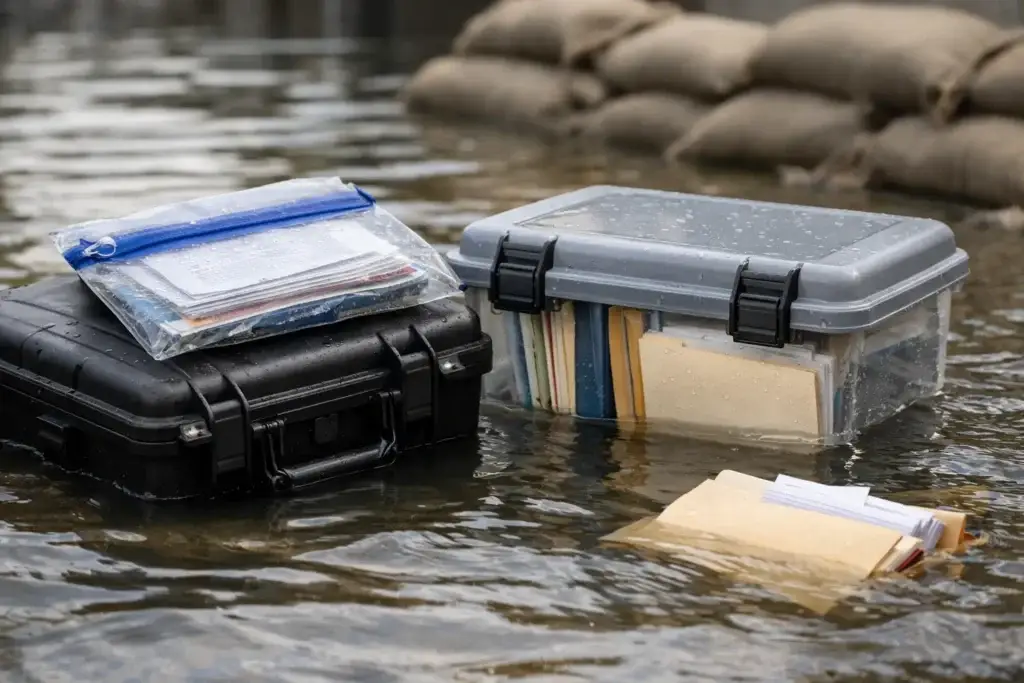
Put original documents inside individual waterproof document pouches or heavy-duty resealable bags. Press out excess air and label each pouch. Then place those pouches in a waterproof, hard-sided document box with a gasket seal and latches. A fire-resistant, water-resistant home safe can provide another layer, but check its water rating closely. Many small safes resist water briefly and can still be submerged, tipped over, or carried away.
Keep the container above the expected flood level, not merely above floor level. An upper-floor closet, high shelf, or secured wall-mounted cabinet is usually safer than a basement, garage, crawl space, or ground-floor office. If your area has a history of deep flooding, the best storage location may be outside the home with a trusted relative, bank safe-deposit box, attorney, or other secure location on higher ground.
Here is what each layer is meant to do:
| Protection layer | What it protects against | What to watch for | |—|—|—| | Waterproof pouch or bag | Splashes, leaks, and brief exposure | Thin bags puncture easily | | Hard-sided waterproof box | Standing water, impacts, and handling | Seals must be clean and intact | | Elevated storage location | Rising water inside the home | Flood depth can exceed expectations | | Digital backup | Loss of physical originals | Requires secure access and power planning | | Evacuation document pouch | Fast departure from home | Must stay ready and easy to grab |
Do not store critical papers in plastic bins with snap-on lids. They are useful for household supplies but often leak when submerged or overturned. Also avoid vacuum-sealing irreplaceable papers unless you have tested the process. Pressure, heat, and adhesives can damage old photographs and fragile records.
Make Digital Copies Before Flood Season
Physical originals matter, but digital copies give you something to use when the originals are inaccessible, contaminated, or lost. Scan priority documents at high resolution, save them as clearly named PDF files, and organize them in folders such as Identity, Insurance, Medical, Property, Financial, and Family.
Use at least two digital backup locations. One can be an encrypted cloud account protected by a strong, unique password and multi-factor authentication. The second can be an encrypted USB drive or solid-state drive stored in your waterproof document box or go-bag. Cloud storage helps when you evacuate without your belongings. An offline drive helps when internet service is down or you cannot access an account immediately.
Protect privacy as seriously as you protect the files themselves. Identity documents, tax returns, and insurance forms can expose enough personal data for fraud if they are lost or shared carelessly. Do not leave unencrypted copies on a shared computer or use simple passwords based on birthdays, addresses, or family names.
Print a short emergency contact sheet as well. Include policy numbers, claim phone numbers, medical contacts, prescription details, and account recovery information. During a power outage, a paper list may be more useful than a phone full of apps and dead batteries.
Build a Grab-and-Go Document Kit
When an evacuation order arrives, you may have only minutes to leave. You should not be sorting through drawers while water reaches the driveway. Keep a compact document pouch inside your evacuation go-bag or immediately beside it.
The pouch should hold originals or certified copies that you would need to identify your family, check into temporary lodging, fill prescriptions, start an insurance claim, access funds, or prove occupancy. Include a small amount of emergency cash in smaller bills. Floods can shut down ATMs, card terminals, and internet-dependent payment systems.
Keep this kit light enough for one adult to carry while also managing children, pets, medication, and other emergency supplies. If the container is too heavy, too large, or buried in storage, it will stay behind when it matters most.
Review the kit twice a year. Replace expired passports or ID copies, update insurance declarations, add new medical information, and remove documents that no longer apply. Pair the review with daylight saving time changes or the start of your local flood season so it becomes a household habit, not a forgotten project.
What to Do When a Flood Warning Is Issued
A flood watch means conditions are possible. A flood warning means flooding is occurring or expected soon. Treat either one as a signal to check your document plan, especially if your property has flooded before or you live near a river, coast, drainage channel, or low-lying road.
Move your document box to the highest safe location immediately. Charge phones and backup batteries, confirm that digital files open correctly, and put the grab-and-go pouch in your vehicle or by the exit. If officials issue an evacuation order, leave when directed. Do not stay behind to protect paperwork, and never drive into floodwater to retrieve it later.
If you have time, take fresh date-stamped photos and video of your home before conditions worsen. Open cabinets and closets, show the condition of walls and floors, and record outdoor structures. That evidence can be valuable if flood damage occurs overnight.
If Documents Get Wet, Act Carefully
Never enter a flooded building until authorities say it is safe. Standing water can hide structural damage, electrical hazards, contaminated sewage, and sharp debris. Wear protective gloves and an N95 mask when handling flood-damaged materials, especially if mold is visible or contamination is likely.
Separate wet papers gently and place them on clean absorbent material in a dry, well-ventilated area. Do not use a high-heat dryer, iron, or direct sunlight, which can warp paper and cause ink to run. Photograph damaged records before attempting cleanup, particularly insurance documents, titles, receipts, and evidence for a claim.
For severely damaged vital records, contact the issuing agency for replacement procedures. For insurance paperwork and household inventories, your digital copies and pre-flood photos may become more useful than trying to restore every original page.
Your family should never have to choose between leaving safely and carrying the documents that hold your life together. Pack the pouch, back up the files, raise the storage box, and put it on your flood-readiness checklist now. The worst day hits fast. Prepare faster.