
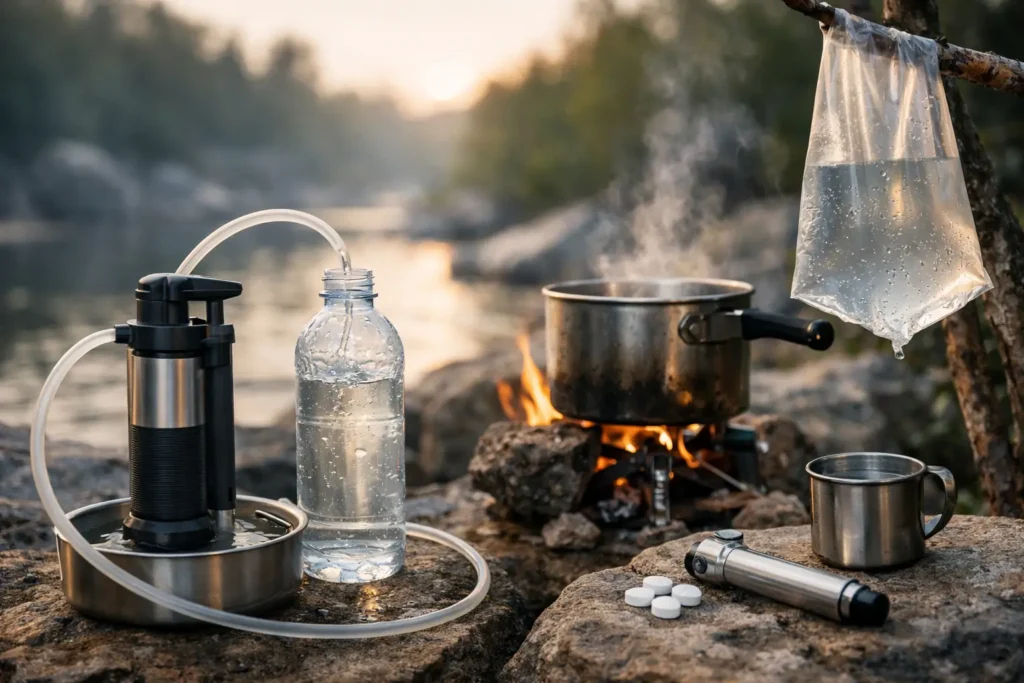
A broken water main, flooded well, wildfire evacuation, or days-long power outage can turn the water from your faucet into a threat without warning. Knowing how to purify water during emergency conditions gives your household options when bottled water is gone, stores are closed, and official water service cannot be trusted.
Do not assume clear water is safe water. Germs that cause severe diarrhea, vomiting, dehydration, and infection are often invisible. Floodwater can carry sewage, animal waste, fuel, and chemicals. A private well may be contaminated after flooding or an earthquake. Even a municipal supply can require a boil-water advisory after storm damage.
Your first move is always to use water you know is safe: commercially bottled water, stored emergency water, or water released from an undamaged home water heater if local officials say the home plumbing is safe. When those sources are limited, use the right treatment method for the water and the emergency in front of you.
Start by Finding the Safest Available Source
Purification is not magic. It can kill or remove many disease-causing organisms, but it cannot make every contaminated source safe. Water mixed with gasoline, pesticides, industrial runoff, saltwater, or unknown chemicals should not be used for drinking, cooking, brushing teeth, making baby formula, or washing dishes. Boiling and bleach do not remove most chemical contamination.
Choose the cleanest source you can access. Rainwater collected in a clean container can be treated. Water from a moving stream is generally preferable to stagnant water, but both require treatment. If you must use flood-affected water, look for another source first. Floodwater is among the highest-risk choices because it can contain sewage and chemical pollution at the same time.
Cloudy water needs a first step before most treatment methods work well. Let sediment settle, then pour the clearer water through a clean cloth, coffee filter, paper towel, or layered fabric into another container. This only removes particles. It does not make the water safe to drink, but it helps boiling, chemical treatment, UV treatment, and filters perform as intended.
How to Purify Water During an Emergency: Four Methods
No single method is best in every scenario. A family sheltering at home with a gas stove has different options than a family evacuating with only a backpack. Build your water plan around more than one method.
1. Boil water when you have fuel and a safe heat source
Boiling is the most reliable household method for killing bacteria, viruses, and parasites. Bring filtered or settled water to a rolling boil for one full minute. At elevations above 6,500 feet, boil it for three minutes. Let it cool in a covered container before drinking.
Boiling does not remove dirt, toxic chemicals, heavy metals, or fuel. It also uses precious fuel, which matters during a winter storm, wildfire evacuation, or extended power outage. Never use a charcoal grill, camp stove, or generator indoors or in a garage. Carbon monoxide can kill before anyone recognizes the danger.
If boiled water tastes flat, pour it back and forth between two clean containers after it cools. That adds air back into the water. Store treated water in a clean, covered container and label it with the date.
2. Use an emergency water filter rated for the threat
A portable filter is one of the most useful tools in an evacuation go-bag, but not all filters protect against the same contaminants. Many backpacking filters remove protozoa and bacteria, including Giardia and Cryptosporidium, but may not remove viruses. That difference matters after hurricanes, sewage overflows, and crowded disaster shelters where viral contamination is a greater concern.
Before buying, check the filter’s stated performance. Look for clear claims about what it removes, how many gallons it can treat, whether it handles viruses, and what replacement parts it requires. A filter rated for bacteria and protozoa is valuable for many wilderness sources. For broader emergency use, pair it with boiling or a chemical disinfectant when the water may contain viruses.
Filters also clog. Keep a backup filter, spare cartridges if your model uses them, and a way to pre-filter silty water. Do not wait until a disaster to learn how your filter works. Practice with it while you have clean water, light, and time.
3. Disinfect water with unscented household bleach
Plain, regular household bleach can disinfect water when boiling is impossible and you do not have an appropriate filter. Use only unscented liquid bleach that lists sodium hypochlorite as the active ingredient. Do not use splashless bleach, scented bleach, color-safe products, powdered cleaners, pool chemicals, or products with added detergents.
For clear water, add 8 drops of bleach per gallon. For cloudy water, first filter it as well as possible, then add 16 drops per gallon. Stir and let the water stand for 30 minutes. It should have a slight chlorine smell. If it does not, repeat the dose once and wait another 15 minutes.
Bleach concentration varies by product and changes as bleach ages, so read the label before an emergency. Store an unopened bottle with your water supplies, rotate it regularly, and keep an eyedropper clearly labeled for water treatment only. Chemical disinfection is less dependable against Cryptosporidium and does not remove chemical pollution. It is a backup tool, not a reason to drink from a contaminated flood zone.
4. Use purification tablets or UV only under the right conditions
Water purification tablets are compact, lightweight, and useful in evacuation kits. Iodine and chlorine dioxide products have different wait times and limitations, so follow the package instructions exactly. Chlorine dioxide is generally more effective against Cryptosporidium than iodine, but it may require a longer treatment period. Iodine is not suitable for everyone, including people with certain thyroid conditions and pregnant individuals. Keep tablets in their original packaging and replace them before expiration.
UV purifiers can kill microorganisms quickly, but they depend on charged batteries and clear water. Silt, floating debris, and cloudy water can shield germs from ultraviolet light. In an outage, a UV device is only as useful as your battery bank or portable power supply. Treat it as a valuable layer in your plan, not your only answer.
Build a Water Plan Before the Warning Arrives
The strongest emergency water strategy is stored water first, treatment tools second. Federal preparedness guidance commonly recommends at least one gallon of water per person per day for a minimum of three days. That is a starting point, not a finish line. Heatwaves, medical needs, pets, sanitation, and delayed recovery can push actual household use much higher.
For a four-person family, three days of water is at least 12 gallons before accounting for pets. Store some water in portable containers for evacuation and some in larger containers for sheltering at home. Keep containers off concrete floors, away from direct sunlight and chemicals, and where they will not freeze or become inaccessible after an earthquake or flood.
Your water kit should include several layers of protection:
- Stored drinking water in sealed containers
- A portable filter and any required replacement parts
- Unscented household bleach and a dedicated dropper
- Purification tablets with current expiration dates
- Clean containers, a metal pot, and a way to boil water safely
- A collapsible water carrier for collecting and transporting water
A manual can opener belongs nearby if your stored food includes canned liquids or ready-to-eat meals. So do cleaning supplies and hand sanitizer. Preventing contamination is easier than treating it later.
Follow Official Advisories, but Keep Your Own Capability
A boil-water advisory means water may be unsafe for drinking, ice, cooking, brushing teeth, washing produce, and preparing infant formula. Follow the exact guidance from local emergency management or the water utility. Some events call for boiling. Others are “do not drink” or “do not use” notices because chemicals may be present. Those warnings require a different water source, not more bleach.
If you rely on a private well, assume it needs inspection and testing after a flood, major earthquake, or nearby wildfire damage. Do not return to normal use because the water looks and smells fine. Contamination can remain after the visible disaster is over.
The worst day hits fast. Prepare faster: store water, choose two treatment methods you can use without grid power, and teach every adult in your household where the supplies are kept. When safe water becomes scarce, a prepared family has choices.