
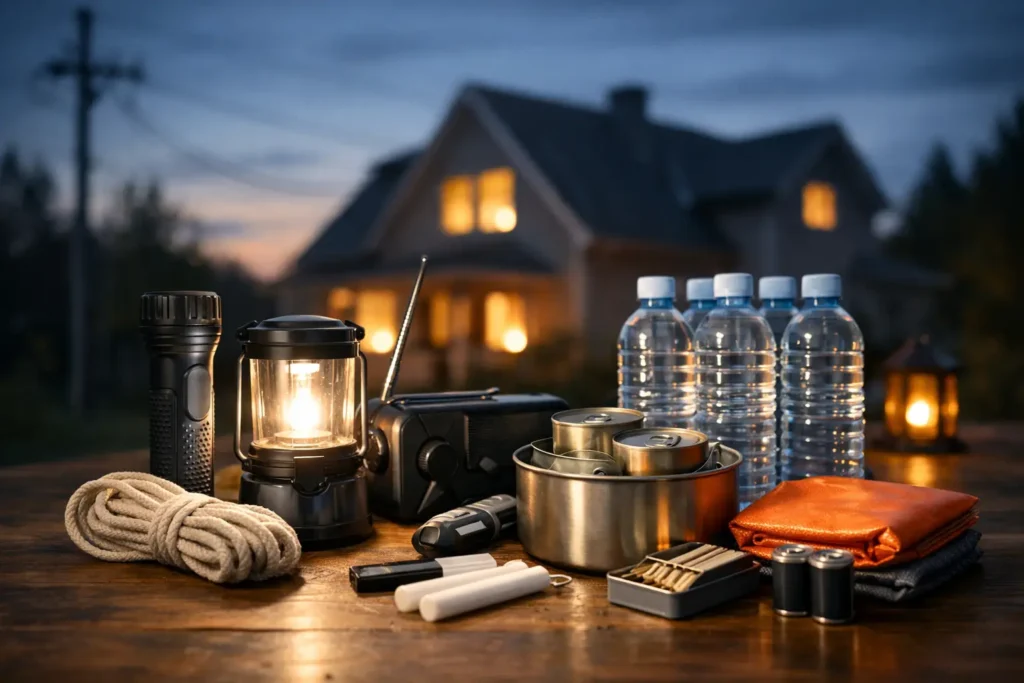
A power outage does not wait until your phone is charged, your prescriptions are refilled, or your freezer is organized. It can arrive with an ice storm, hurricane, wildfire, heatwave, overloaded grid, or a vehicle striking a utility pole. Knowing how to prepare for power outage means making critical decisions while the lights are still on – not trying to buy supplies after shelves are empty.
For most households, the danger is not a few dark hours. The danger is losing water, heat or air conditioning, communications, refrigerated medicine, safe food, and information at the same time. Prepare for at least 72 hours without power. If you live in a storm-prone, rural, or wildfire-risk area, plan for a week or longer.
Start With the Essentials That Keep People Safe
Your first goal is to protect life, not convenience. Build your outage supplies around water, food, light, medical needs, communications, and temperature control. Keep them together in a known location, preferably in sturdy waterproof bins that every adult in the household can access.
Store at least one gallon of water per person per day for three days, with more if you have children, pets, hot weather, or limited access to clean water. This amount covers drinking and basic sanitation, but it is not generous. A family of four should aim for 12 gallons as a minimum, then build toward a larger reserve.
Choose shelf-stable food your household will actually eat: canned beans, soups, tuna, fruit, nut butter, protein bars, crackers, ready-to-eat meals, and baby or pet food if needed. Include a manual can opener. Food that requires a working stove, a microwave, or lots of water is not your best first-line outage food.
Safe lighting matters immediately. Stock LED flashlights, headlamps, spare batteries, and battery-powered lanterns. Headlamps are especially useful because they leave both hands free to check a breaker, carry a child, prepare food, or provide first aid. Avoid relying on candles. An open flame in a dark, stressed household creates a fire risk when emergency help may be delayed.
How to Prepare for Power Outage With Backup Power
Backup power should match the loads you cannot safely lose. Start by identifying what must keep running: a phone, medical device, refrigerator, sump pump, well pump, mobility equipment, space heater, fan, or internet equipment needed for emergency alerts and work.
A portable power station is a practical first purchase for many homes. It can recharge phones, run lights, power a radio, and support some low-watt devices without fuel or exhaust. Its limits matter, though. A small unit will not run a central air conditioner, electric water heater, clothes dryer, or most electric space heaters for long. Check each device’s wattage before an outage, then choose capacity based on real use rather than marketing claims.
A fuel-powered generator can handle larger demands, but it requires strict safety discipline. Never run one indoors, in a garage, in a basement, near windows, or under an open carport. Carbon monoxide is odorless and can kill while a family sleeps. Operate generators outside, well away from doors, windows, and vents, and keep working carbon monoxide alarms on every sleeping level.
If you use a generator to power home circuits, have a qualified electrician install a transfer switch or interlock. Never plug a generator directly into a wall outlet. That dangerous practice can send electricity back through utility lines and injure utility workers.
Keep approved fuel containers, stabilized fuel if appropriate, extension cords rated for outdoor use, and a plan for refueling. Fuel is useful only if it is stored safely and rotated before it degrades.
| Need | Best first option | Why it matters | |—|—|—| | Phones, lights, radio | Battery bank or portable power station | Keeps communication and information available | | Refrigerated medicine | Power station or generator sized for the refrigerator | Protects time-sensitive medicine and food | | Sump pump or well pump | Generator with proper transfer equipment | Helps prevent flooding or loss of household water | | CPAP or other medical device | Dedicated battery backup plus medical provider plan | Reduces risk when an outage lasts overnight |
Protect Food, Water, and Medicine Before the Grid Fails
Keep refrigerator and freezer thermometers inside now. During an outage, keep both doors closed as much as possible. An unopened refrigerator generally keeps food cold for about four hours. A full freezer can hold a safe temperature for about 48 hours, or about 24 hours if half full. These are estimates, not guarantees, so use a thermometer rather than guessing by appearance or smell.
Freeze containers of water ahead of time to help your freezer stay cold. They also become drinking water as they thaw. If an outage is expected, turn your refrigerator and freezer to colder settings before the power fails, but do not depend on that step alone.
People who rely on refrigerated medication, oxygen, dialysis, powered mobility equipment, or electrically operated medical devices need a separate plan. Talk with the prescribing clinician, pharmacy, medical equipment provider, and local utility about outage procedures. Keep prescriptions filled early when severe weather is forecast, store a printed medication list, and know where you could go if home power is no longer safe.
Do not assume tap water will remain available. Municipal water systems may keep operating, but outages can affect pumping, treatment, or local pressure. Private wells typically stop working when the electricity does. Store water first, then add a water filter and purification method as a backup.
Build a Communication Plan That Works Without Wi-Fi
When the grid goes down, cell networks can become overloaded and home internet may stop. Every household should have a battery-powered or hand-crank NOAA weather radio, charged power banks, and a written contact plan.
Choose one out-of-area contact who can relay messages between family members. Text messages often get through when calls fail. Write down phone numbers, addresses, insurance information, utility account numbers, and medical contacts. Do not leave essential information locked behind a dead phone or inaccessible password manager.
Set alerts from your local emergency management agency and utility provider before severe weather arrives. During a widespread outage, official updates can tell you whether the problem is localized, whether a shelter is open, and whether downed lines, flooding, or wildfire conditions make travel dangerous.
Prepare Your Home for the Conditions Outside
The same outage can be uncomfortable in mild weather and life-threatening during extreme cold or heat. Your plan must reflect your region and season.
In winter, protect people first, then plumbing. Keep layered clothing, blankets, sleeping bags, hats, and gloves accessible. Close off unused rooms, block drafts with towels, and gather family members in one insulated area. Never use an oven, charcoal grill, propane camp stove, or unvented heater indoors for warmth. These can cause fire, carbon monoxide poisoning, or both.
In summer, heat can become dangerous quickly for infants, older adults, pregnant people, pets, and anyone with medical conditions. Keep battery fans, cooling towels, electrolyte supplies, and a plan to relocate to an air-conditioned public site, friend’s home, or designated cooling center. Open windows only if outdoor air quality and security allow it. During wildfire smoke events, opening windows may make the indoor air worse.
If you have a sump pump, test it before storm season and consider a battery backup. If you have an electric garage door, learn how to use the manual release before you need to leave in an emergency. Keep a fire extinguisher, smoke alarms, carbon monoxide alarms, and a basic tool kit ready. Power failures often expose small home weaknesses at the worst possible time.
Make the Plan Usable Under Stress
Supplies do not protect your family if nobody can find or operate them. Test flashlights and power stations every few months. Rotate food, water, batteries, and fuel. Charge devices when major weather is forecast. Keep your vehicle above half a tank during high-risk seasons, because gas stations may not be able to pump fuel without power.
Walk through the plan with everyone in the home. Decide where supplies are stored, who brings in pets, who checks on relatives or neighbors, and where you will go if temperatures become unsafe. Renters should also ask their property manager how building access, elevators, water, and emergency lighting are handled during an outage.
The worst day hits fast. Prepare your water, light, backup power, and family plan now, while every store is open and every decision is still yours to make.