
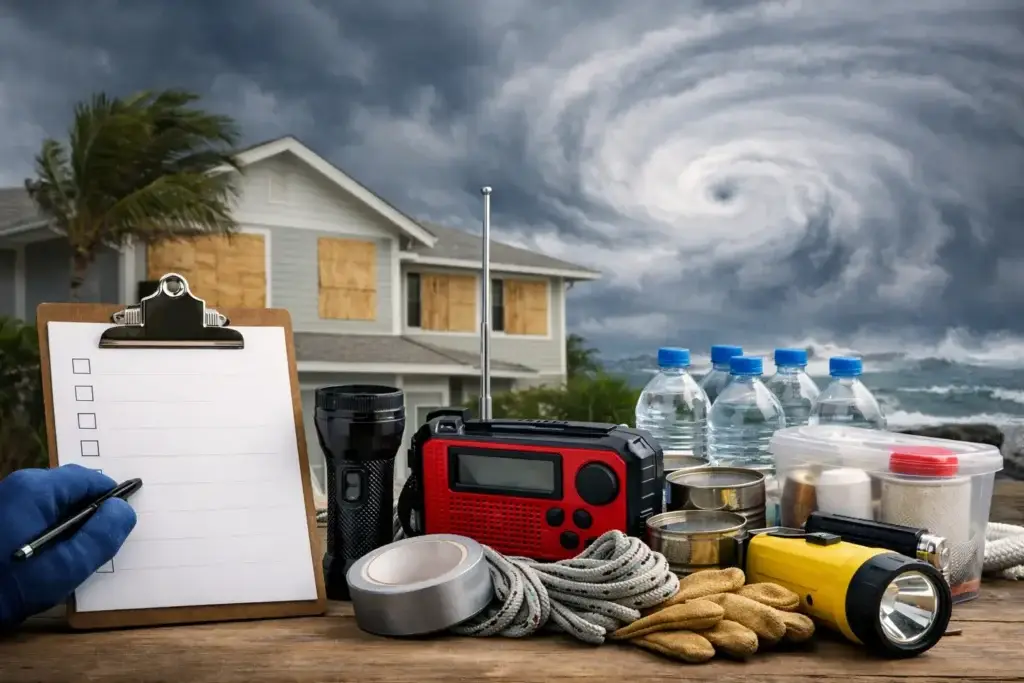
A hurricane does not wait for your schedule, your payday, or the moment you finally decide to get organized. Once watches and warnings begin, stores empty, fuel lines grow, evacuation routes clog, and the safe choices become limited. This hurricane preparedness checklist for homeowners is built for the actions that protect your family before wind, flooding, and power loss take control.
Hurricanes create several threats at once: destructive wind, storm surge, inland flooding, tornadoes, contaminated water, blocked roads, and outages that can last days or weeks. Your plan must account for all of them. A house can survive the wind and still become unsafe because floodwater cuts off access, the roof leaks, or refrigerated food spoils during a prolonged outage.
Hurricane Preparedness Checklist for Homeowners
Start early. The right time to buy supplies, photograph your property, and learn your evacuation zone is before a named storm appears on the forecast.
Build a supply kit that works without utilities
Every household needs enough supplies to function when stores, tap water, cell service, and electricity are unavailable. Plan for at least three days away from home and seven days at home when possible. Larger households, people with medical needs, and homes in isolated areas should plan for more.
Stock these essentials in waterproof bins or heavy-duty waterproof bags:
- Water: Store at least one gallon per person per day for drinking and sanitation. Keep additional water for pets.
- Food: Choose shelf-stable, ready-to-eat foods your family will actually eat. Include a manual can opener, disposable plates, and utensils.
- Light and communication: Keep flashlights, headlamps, spare batteries, power banks, charging cables, and a battery-powered or hand-crank emergency radio.
- First aid and medications: Maintain a complete first-aid kit, prescription medications, backup glasses, hearing-aid batteries, and copies of prescriptions.
- Sanitation: Pack toilet paper, moist wipes, trash bags, soap, disinfectant, menstrual supplies, and a basic bucket toilet setup if water service fails.
- Protective gear: Include N95 masks, work gloves, sturdy boots, rain gear, eye protection, and insect repellent for cleanup and debris hazards.
Do not depend on candles for emergency lighting. Open flames are a fire risk in damaged homes, especially where gas leaks, fuel containers, or stressed family members are involved. Battery-powered lights are the safer choice.
Protect documents, cash, and insurance records
Water ruins paperwork quickly, and a storm can scatter possessions far beyond your property line. Put identification, insurance policies, mortgage information, medical records, vehicle titles, and important contact numbers in a waterproof document pouch. Create digital copies, but do not rely only on cloud access or your phone battery.
Keep some cash in small bills. Card readers, ATMs, and fuel pumps may not work after a widespread outage. Review your homeowners and flood insurance now. Standard homeowners policies generally do not cover flood damage, and flood insurance often has waiting periods before coverage begins. If you live near the coast, a river, drainage canal, or low-lying roadway, do not assume your risk is low because your home has never flooded before.
Secure the outside of your home
Loose outdoor items become dangerous projectiles in hurricane-force wind. Walk your property with the question: What could break a window, damage a vehicle, or strike a person?
Bring in patio furniture, grills, toys, planters, umbrellas, trash cans, flags, and decorations. Secure sheds and outdoor storage. Trim weak branches before hurricane season, not when winds have already increased. Clear gutters and downspouts so rainwater has somewhere to go, and inspect your roof for loose shingles, damaged flashing, or obvious gaps.
If your home has storm shutters, test them before the season and make sure every required fastener is available. If you use plywood, measure and cut it in advance. Waiting until a warning is issued can leave you competing for scarce materials in unsafe conditions. Never tape windows as a substitute for shutters or impact protection. Tape does not stop flying debris from breaking glass.
Move vehicles into a garage if safe, or park away from trees, power lines, and flood-prone streets. Fill the gas tank early. A full tank gives you more evacuation options and reduces the chance of moisture building inside the fuel system during storage.
Prepare for power loss and food safety
A portable power station, generator, or battery backup can make an outage more manageable, but each has limits. A power station is quieter and can be used indoors, but it may not run large appliances for long. A generator can support more equipment, but it must stay outdoors, far from doors, windows, vents, and attached garages. Carbon monoxide is odorless and deadly. Never run a generator inside a home, garage, shed, basement, or covered porch.
Prioritize power for medical devices, communications, lighting, refrigeration, and essential cooling needs. Freeze containers of water ahead of time to help keep a freezer cold longer. Keep appliance thermometers in the refrigerator and freezer. If refrigerated food has been above 40 degrees Fahrenheit for more than two hours, it may not be safe to eat. When in doubt, throw it out.
Unplug sensitive electronics before the storm arrives. Use surge protectors, but understand they cannot guarantee protection from all electrical damage. If flooding is possible, move electronics, documents, chemicals, and valuables to higher levels of the home. Do not store critical supplies in a basement or ground-floor closet that could flood.
Decide Early: Shelter or Evacuate
The most dangerous mistake homeowners make is treating an evacuation order as a suggestion. If local officials tell your area to leave, go. Your home is replaceable. Your family is not.
Know your evacuation zone, two routes out, and the location of nearby shelters. Identify a destination outside the evacuation area, whether that is a hotel, a friend’s home, or a family member’s house. Plan for pets too. Many shelters and hotels have restrictions, so keep carriers, leashes, food, vaccination records, and medication ready.
Your go-bag should be near the exit, not scattered across closets. Each family member needs clothing, medications, water, snacks, chargers, identification copies, hygiene supplies, and comfort items for children. Keep maps in the vehicle in case navigation apps fail. Establish an out-of-state contact who can serve as a check-in point if local phone networks are overloaded.
If officials do not order evacuation and your home is outside storm-surge and flood danger, sheltering may be appropriate. Stay in an interior room on the lowest level that is not likely to flood, away from windows and exterior doors. Do not shelter in a room beneath large trees or in a mobile home. Mobile homes are especially vulnerable to hurricane winds, and occupants should follow evacuation guidance early.
Protect against flooding, not just wind
Floodwater is often the deadliest hurricane hazard. It can rise far from the coastline, especially when a slow-moving storm drops heavy rain over saturated ground. Sandbags can help redirect shallow flowing water, but they will not make a home floodproof against major flooding or storm surge.
If you have time, elevate valuables and appliances, shut off utilities only if instructed or if you can do so safely, and move hazardous chemicals away from areas that may flood. Never drive through flooded roads. Water can hide washouts, downed power lines, and debris, and a vehicle can be swept away in surprisingly shallow moving water.
After the storm, wait for official information before returning to an evacuated area. Treat downed wires as energized. Avoid standing water, damaged buildings, and floodwater that may contain sewage, chemicals, or sharp debris. Document damage with photos and video before cleanup when safe to do so. Wear gloves, boots, eye protection, and an N95 mask when handling wet drywall, insulation, or mold-prone materials.
A hurricane plan is not something you finish when the forecast turns frightening. It is a household habit: check supplies, strengthen weak points, protect records, and keep your go-bags ready. Take action while the sky is clear. That is when you still control the outcome.