
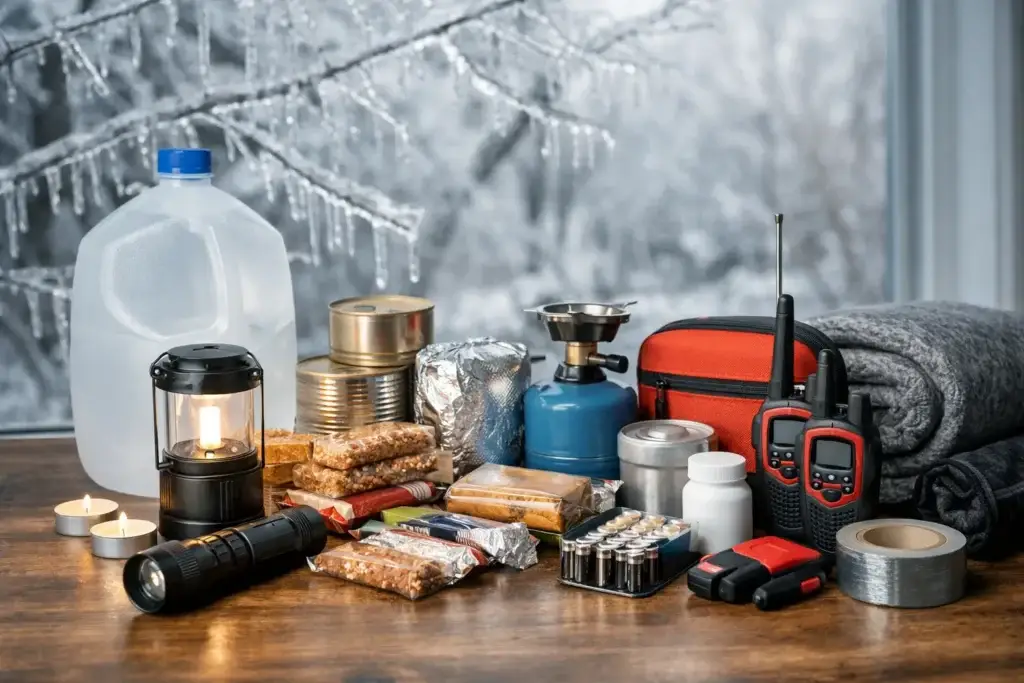
A quarter-inch of ice can turn a normal neighborhood into a dangerous place to be. Trees split without warning, power lines fail, roads become impassable, and a home can lose heat for days. This ice storm emergency supplies list is built for the conditions that make ice storms different from ordinary snow: long outages, extreme cold indoors, blocked travel, and the risk of carbon monoxide poisoning.
Do not plan on driving to the store after freezing rain starts. Shelves empty early, delivery routes stop, and the safest decision may be to stay home until utility crews and road crews can work. Build your supplies before the forecast turns serious.
Start With Heat, Light, and Safe Power
The most urgent problem in a prolonged ice storm is often not food. It is keeping people safely warm after the electricity goes out. A home loses heat quickly when temperatures are below freezing, especially in older houses, apartments with electric heat, and homes with poor insulation.
Store enough warm layers for every person in the household: insulated coats, hats, gloves, wool socks, thermal base layers, blankets, and sleeping bags rated for cold weather. Layers work better than relying on one heavy blanket because they trap warmth and allow people to adjust as conditions change. Keep these supplies where you can reach them in the dark, not in a garage or attic.
For light, use flashlights, headlamps, spare batteries, and battery-powered lanterns. Headlamps are especially useful when you need both hands to check a breaker panel, care for a child, prepare food, or shut off water. Avoid depending on candles. An open flame adds fire risk when people are tired, rooms are crowded, and pets or children are moving around in the dark.
A portable power station can keep phones, medical devices, lights, and small electronics running. Its value depends on its capacity and your household’s needs. It will not usually run central heat or an electric range for long, so prioritize communications, medical equipment, and lighting. If you use a fuel-powered generator, operate it outdoors only, well away from doors, windows, vents, and attached garages. Never run one inside a home, basement, garage, or enclosed porch.
Ice Storm Emergency Supplies List: Core Essentials
Build for at least 72 hours, but aim for seven days if your area has a history of major ice events. Downed lines and fallen trees can delay restoration far longer than most families expect.
- Water: Store at least one gallon per person per day for drinking and basic sanitation. Add extra water for pets, infant formula, and anyone with medical needs. Keep a water filter or purification tablets as a backup, but do not assume melted snow is clean water.
- Shelf-stable food: Keep foods that need little or no cooking, including canned meats and beans, nut butter, ready-to-eat meals, protein bars, dried fruit, crackers, and shelf-stable milk. Include a manual can opener and foods your family will actually eat.
- Medication and first aid: Maintain at least a seven-day supply of prescription medicine when possible. Your kit should also include bandages, gauze, antiseptic, pain relievers, a thermometer, cold-weather skin protection, and copies of prescriptions and medical information.
- Communication supplies: Pack fully charged power banks, charging cables, a battery or hand-crank emergency radio, extra batteries, and a written contact list. Cell networks can become unreliable, and a radio provides local weather alerts and official instructions.
- Sanitation items: Store toilet paper, garbage bags, moist towelettes, hand sanitizer, soap, feminine hygiene products, diapers, and a bucket with heavy-duty bags if a water outage or plumbing failure becomes prolonged.
- Cash and documents: Keep small bills, identification copies, insurance details, property records, emergency contacts, and medication lists inside waterproof bags or containers. Card readers and ATMs may not work during a widespread outage.
If you have infants, older adults, pets, or someone who depends on electricity for health equipment, build a separate layer of supplies around their needs. Formula, diapers, pet food, oxygen backup, mobility-device charging, and refrigerated medication plans cannot be improvised after the power fails.
Protect Your Home From Cold and Water Damage
An ice storm can damage a house even if no one leaves it. Frozen pipes are a major threat when indoor temperatures fall. A burst pipe can flood a home after the storm and create a second emergency when repair crews are overwhelmed.
Keep pipe insulation, towels, a bucket, work gloves, and basic tools available. Know where your main water shutoff valve is and make sure every responsible adult can use it. If a pipe bursts, shutting off water fast can limit severe damage. During an outage, open cabinet doors beneath sinks to let warmer indoor air reach pipes. If temperatures inside are falling sharply, follow local utility or emergency guidance on whether to let faucets drip.
You should also have a fire extinguisher, smoke alarms with fresh batteries, and carbon monoxide alarms on every level of the home. This is not optional during winter outages. People take dangerous shortcuts when they are cold: charcoal grills indoors, camping stoves in closed rooms, generators in garages, or unvented heaters used without proper safeguards. Carbon monoxide has no smell and can incapacitate a family before anyone recognizes the danger.
Supplies for Travel, Evacuation, and Getting Help
The safest place during freezing rain is usually home. But a tree strike, medical emergency, loss of safe heat, or official evacuation order can force you out. Prepare a vehicle kit and go-bags before the storm, not while ice is coating the driveway.
Your vehicle should carry an ice scraper, snow brush, traction aids, jumper cables or a jump starter, reflective triangles, a flashlight, blankets, gloves, snacks, water, and a compact first-aid kit. Keep the fuel tank at least half full when ice is forecast. A gas station may lose power, and idling in a stranded vehicle burns fuel faster than many drivers realize.
Every household member should have a go-bag with warm clothing, medication, documents, phone charging, hygiene supplies, water, and a few high-calorie foods. For children, add a familiar comfort item. Stress is harder to manage when they are cold, tired, and displaced.
Do not drive across roads blocked by downed wires or fallen trees. Treat every downed line as energized. Stay far away, keep others back, and report it to emergency services or the utility. Never try to move a line with a branch, tool, vehicle, or gloved hand.
What to Buy First If You Are Starting Today
Preparedness can feel expensive when you look at the entire list at once. Start with the equipment that protects life during the first night: drinking water, warm layers and blankets, flashlights or headlamps, batteries, shelf-stable food, a first-aid kit, medications, power banks, and carbon monoxide alarms.
Next, add a weather radio, portable power station, water shutoff tool, pipe insulation, vehicle supplies, and sanitation backups. A generator can be valuable for some households, but it requires fuel storage, outdoor placement, safe cords, maintenance, and disciplined operation. If you cannot use one safely, invest first in lower-risk backup power and a plan to relocate if your home loses heat.
Check the kit twice a year. Replace expired food and medicine, test alarms and radios, recharge power stations, rotate water, and make sure winter clothes still fit children. Preparedness is not a box you buy once. It is a household system that has to work on the coldest, darkest night of the year.
When freezing rain is in the forecast, charge every device, fill clean containers with water, bring pets inside, park away from large limbs if possible, and tell your family where the supplies are. The worst day hits fast. Prepare faster, while the roads are still open and the lights are still on.