
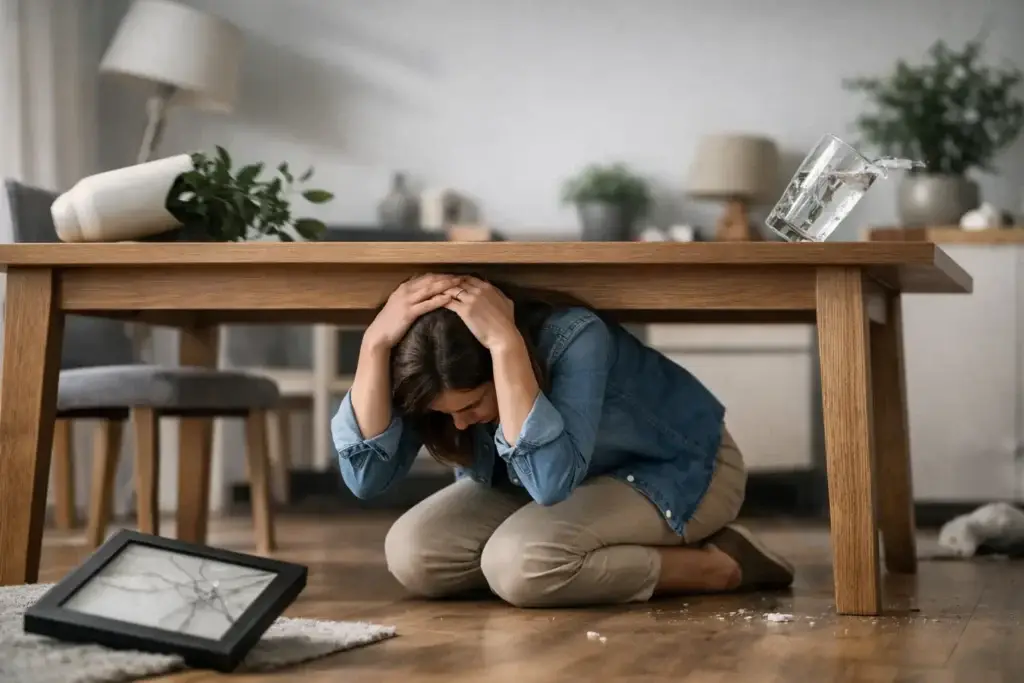
The first seconds of an earthquake are not the time to decide where your family should go. Violent shaking can throw furniture, break glass, collapse shelves, and cut power before you reach a doorway. Knowing what to do during an earthquake at home gives everyone one immediate job: protect your head and neck, get under cover if possible, and stay put until the shaking stops.
The safest response indoors is usually simple: Drop, Cover, and Hold On. It is not dramatic, but it works because most earthquake injuries happen when people are struck by falling or flying objects while trying to move.
What to Do During an Earthquake at Home
The moment shaking begins, drop to your hands and knees. This keeps you from being knocked down and lets you crawl a short distance if solid cover is within reach. Get beneath a sturdy table or desk, then cover your head and neck with one arm. Use the other hand to hold onto the furniture leg.
If the table moves, move with it. Do not assume it will stay in place during strong shaking. Your goal is to remain protected from falling lamps, ceiling debris, glass, bookshelves, and items tumbling out of cabinets.
If no sturdy table or desk is nearby, get low beside an interior wall and cover your head and neck with your arms. Stay away from windows, exterior doors, fireplaces, hanging objects, tall furniture, and anything that can fall or shatter. Do not run across the room to find a better spot. In a real earthquake, a few steps can be enough to put you in the path of broken glass or falling objects.
Do not run outside
A common instinct is to flee the house. Resist it. The area immediately outside can be one of the most dangerous places during shaking because of falling bricks, roof materials, glass, power lines, chimneys, and exterior walls. Stay indoors until the shaking has stopped and you can assess a safe path out.
Doorways are not automatically safe either. In most modern US homes, a doorway offers no more protection than another part of the room. It also leaves you exposed to a swinging door and falling debris. Use a doorway only if you know it is a strongly supported structural doorway and no better cover is available.
If you are in bed, stay there
If an earthquake starts while you are in bed, stay in bed. Pull a pillow over your head and neck and remain there unless a heavy object directly above you is likely to fall. Bare feet on broken glass are a preventable injury, especially when power is out and the floor cannot be seen.
Keep closed-toe shoes, a flashlight, and work gloves within reach of the bed. Those three items can make the first minutes after an earthquake much safer.
If you use a wheelchair or walker
Lock wheelchair wheels if possible. Bend forward and protect your head and neck with your arms, a pillow, a book, or a jacket. Do not attempt a risky transfer to the floor during strong shaking. People using walkers should get as low as safely possible near an interior wall and cover their head and neck.
Earthquake dangers by room
Your safest move depends on where you are when the ground starts moving. Kitchens demand extra caution because glass, knives, appliances, and cabinet contents can become hazards quickly. Move only a short distance away from the stove, refrigerator, and upper cabinets, then get low and cover your head.
In a living room, avoid windows, mirrors, wall-mounted televisions, tall bookcases, and heavy framed art. If you have a sturdy coffee table that can provide meaningful cover, use it. Otherwise, shelter near an interior wall and protect your head and neck.
In a bathroom, stay low and cover up. Glass shower doors, mirrors, and medicine cabinets may break. If you can safely reach a towel, blanket, or bath mat, use it to shield your head and exposed skin, but do not spend precious seconds searching for one.
If you are cooking, do not try to turn off burners during active shaking. Get down and take cover first. A small cooking fire is less urgent than protecting yourself from a falling cabinet or a major head injury.
What Not to Do When Your House Is Shaking
Earthquakes punish rushed decisions. Do not use elevators, even if you live in an apartment building. Do not stand in a doorway because you saw it in an old movie. Do not stand under a ceiling fan, beside a large window, or beneath a heavy light fixture.
Avoid the urge to check on every family member while shaking is still happening. If your children are in another room, call out calmly and tell them to Drop, Cover, and Hold On. Trying to cross the house can expose you to the same hazards you are trying to avoid.
Pets may hide, bolt, or panic. Do not chase them during the shaking. Protect yourself first. Once the motion stops, keep pets secured with a leash, carrier, or closed room if conditions allow. Aftershocks can frighten animals and send them running into unsafe areas.
When the Shaking Stops
The end of the first quake is not the end of the emergency. Aftershocks can arrive seconds, minutes, days, or even weeks later. They may be strong enough to cause additional damage, particularly in a home already weakened by the main event.
Before moving through the house, put on sturdy shoes. Check yourself and those nearby for serious bleeding, trouble breathing, loss of consciousness, or signs of a head injury. Use your first-aid supplies, but call emergency services for life-threatening injuries when phone service is available. If lines are overloaded, send a text message rather than repeatedly calling.
Look for immediate hazards: fire, the smell of natural gas, sparking wires, damaged electrical panels, fallen power lines, and cracked walls or ceilings. If you smell gas or hear hissing, do not use matches, lighters, candles, appliances, light switches, or vehicles nearby. Leave the building, move away from the area, and report the suspected leak from a safe location.
If your home has visible structural damage, get everyone outside carefully once shaking has stopped. Stay clear of the building, utility lines, chimneys, and damaged trees. Do not reenter until local officials or a qualified professional says it is safe. A house can look intact while its foundation, chimney, or framing has been compromised.
Keep your emergency radio on for official instructions. In coastal areas, a strong or long earthquake may trigger a tsunami threat. If authorities issue an evacuation order, leave immediately and move to higher ground or the designated evacuation area. Do not wait to see the water.
Prepare Your Home Before the Next Earthquake
The best earthquake response starts before the ground moves. Secure tall bookcases, dressers, televisions, water heaters, and heavy appliances to wall studs. Install latches on cabinets that hold dishes, chemicals, or glass. Keep heavy items on lower shelves and move beds away from windows, mirrors, and large wall hangings.
Every household also needs supplies that work when electricity, water, roads, and stores are disrupted. Keep a 72-hour kit in an easy-to-reach location, not buried under boxes in the garage. At minimum, it should include water, shelf-stable food, a first-aid kit, medications, flashlights, extra batteries, an emergency radio, chargers or a portable power station, N95 masks, work gloves, sanitation supplies, and copies of key documents in a waterproof bag.
Store a smaller grab-and-go version near an exit in case your home becomes unsafe. If you have children, make sure they know where it is and practice the plan with them. A family drill should be short and realistic: identify safe spots in each room, practice Drop, Cover, and Hold On, then choose a meeting location outside and away from buildings.
Do not depend on memory when the house is dark, alarms are sounding, and everyone is frightened. Label your gas shutoff valve, keep the correct tool nearby only if your utility provider recommends customer shutoff, and teach responsible adults when it is appropriate to leave it alone. Turning off gas unnecessarily can create a long interruption if only qualified personnel are allowed to restore service.
Preparedness is not panic. It is the decision to protect your family before they need protection. Secure the hazards, stage the supplies, practice the response, and make sure everyone under your roof knows exactly where to take cover when the shaking starts.