
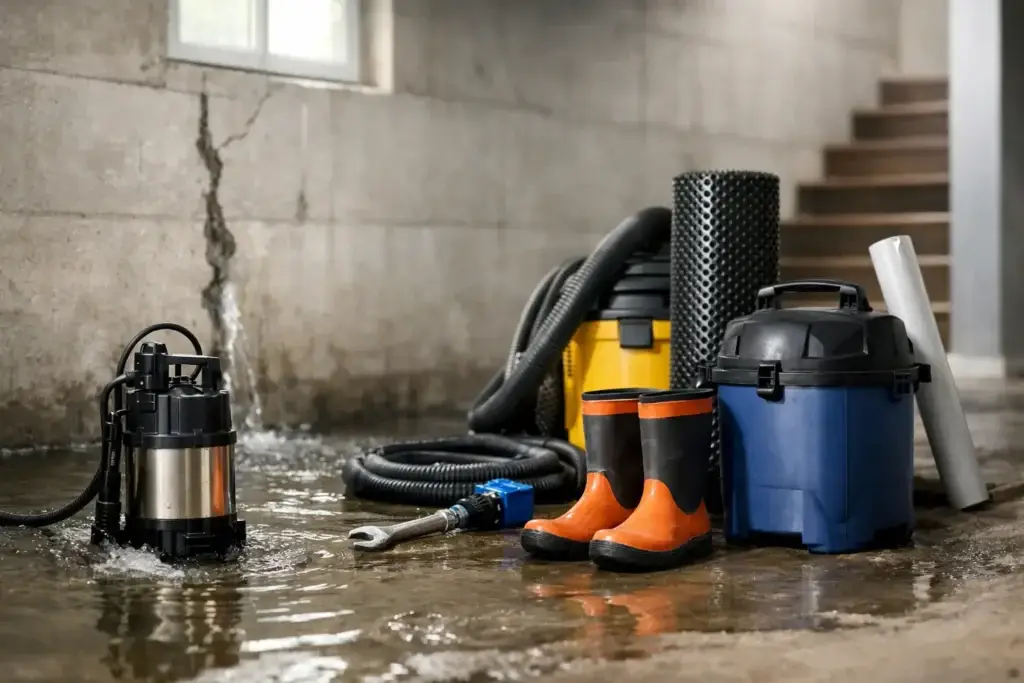
A basement can go from dry storage space to a contaminated, dangerous cleanup zone in a single storm. This basement flood prevention guide is built for the work that must happen before water reaches the foundation: controlling runoff, stopping backups, protecting critical equipment, and keeping your family out of harm’s way.
Do not assume a small leak is harmless because it only appears during heavy rain. Water pressure, saturated soil, clogged drains, failed sump pumps, and overloaded municipal sewers can turn a minor warning into thousands of dollars in damage. Prepare while the floor is dry and you can move deliberately.
Find Out How Water Can Reach Your Basement
Flood prevention starts with identifying the entry route. Look for water stains, peeling paint, white mineral deposits on concrete, musty odors, cracked walls, and damp carpet edges. These signs tell you water has already found a weakness, even if it has not yet caused a visible flood.
Rainwater often enters because the ground around the house slopes toward the foundation. Gutters that overflow beside the home, downspouts that discharge too close to the wall, and blocked exterior drains keep large volumes of water where they do the most damage. In other homes, water rises through floor cracks when the water table climbs after prolonged rain or snowmelt.
Sewer backup is a separate threat and deserves more caution. When public sewer lines become overloaded, wastewater can reverse through basement floor drains, toilets, showers, or laundry connections. That water may contain sewage and should never be treated like ordinary rainwater. If your neighborhood has experienced backups before, ask your local utility or a licensed plumber about protections designed for your property.
Fix Exterior Drainage Before Buying Cleanup Gear
A wet-dry vacuum is useful after a minor leak. It is not flood prevention. The most effective work happens outside, where you reduce the water pressing against your foundation.
Clean gutters at least twice a year and after major windstorms. Make sure downspouts are firmly attached, free of clogs, and extended far enough to send water away from the home. A discharge point should not simply move water from one side of the foundation to another. Watch it during a hard rain to confirm water keeps flowing away.
Check the grade around the house. Soil, mulch, and landscaping should slope away from the foundation so rain drains outward instead of pooling beside the wall. Low spots near the home need to be filled and compacted. If your property sits at the bottom of a hill or receives runoff from nearby lots, simple grading may not be enough. A drainage contractor may recommend a swale, catch basin, French drain, or other site-specific solution.
Keep window wells clear of leaves, trash, and snow. Install secure covers that keep debris and rain out while still allowing proper drainage. A blocked window well can fill like a bucket and force water through an old basement window.
Build a Sump Pump System That Works During an Outage
For many homes, the sump pump is the last line of defense when groundwater rises. It is also one of the most common failure points because homeowners do not test it until the storm is already underway.
Pour water into the sump pit several times a year to make sure the float activates, the pump runs, and water exits through the discharge line. Check that the line is not frozen, crushed, blocked, or dumping water close enough to flow back toward the foundation. Clean debris from the pit according to the pump manufacturer’s directions.
A primary sump pump alone may not protect your home during a severe storm. Heavy rain often causes power outages, exactly when the pump needs electricity most. Add a battery backup sump pump with an alarm, or consider a water-powered backup where local plumbing conditions support it. A backup unit gives you time, but it is not permission to ignore the forecast or leave town without checking conditions.
Keep a portable power station or properly rated generator plan for extended outages, but understand the trade-off. Many portable power stations cannot run a high-draw sump pump for long, and a generator must operate outdoors, far from doors and windows, to prevent carbon monoxide poisoning. Never run a generator in a basement, garage, shed, or enclosed porch.
Sump Pump Readiness Checklist
Before storm season, confirm that you have:
- A tested primary sump pump sized for the pit and drainage demand
- A battery or water-powered backup pump with a high-water alarm
- A clear discharge line that sends water well away from the foundation
- A portable power plan for outages, including fuel or charged battery capacity
- A manual method for removing limited water, such as buckets, a wet-dry vacuum, and a utility pump
Stop Plumbing and Sewer Backup Risks
Install check valves where appropriate to prevent water from flowing backward through drainage pipes. A licensed plumber can evaluate whether a backwater valve is suitable for your home and explain its maintenance needs. These valves can be highly effective, but a poorly maintained valve can create its own drainage problems.
Know where your main water shutoff valve is and label it clearly. A burst pipe, failed washing machine hose, or frozen line can flood a basement even when the weather outside is clear. Every adult in the household should know how to shut off the water safely.
Replace old rubber washing machine hoses with braided stainless steel hoses, and inspect plumbing supply lines for corrosion, bulges, or slow drips. If your water heater, furnace, or laundry area is in the basement, consider water leak sensors that send an audible alert or phone notification. Place them near the sump pit, water heater, washing machine, utility sink, and floor drain.
Protect What Cannot Get Wet
The safest basement storage strategy is simple: keep irreplaceable items out of the basement. Family photographs, passports, insurance records, medical documents, external hard drives, and heirlooms belong on an upper floor or in waterproof, portable containers that can leave with you.
For supplies that must remain downstairs, use heavy-duty waterproof bins with secure lids and elevate them on sturdy shelving. Do not place bins directly on concrete, even if the basement has never flooded. Raise emergency food, drinking water, first-aid supplies, N95 masks, flashlights, radios, batteries, and evacuation bags above the likely water line.
Store chemicals, paint, fuel, and pesticides high and secured. Floodwater can spread hazardous materials throughout the basement and make cleanup more dangerous. Keep electrical cords, extension cords, and power strips off the floor. If your electrical panel is in a flood-prone area, consult a qualified electrician about practical protection options.
| Item to Protect | Best Action Before a Storm | Why It Matters | |—|—|—| | Emergency supplies | Store in sealed bins on elevated shelves | Keeps essential gear usable during an evacuation or outage | | Documents and photos | Move upstairs or pack in waterproof bags | Prevents permanent loss of records and family memories | | Appliances and utilities | Add leak alarms and inspect connections | Provides early warning before a small failure becomes a flood | | Electronics and cords | Elevate and unplug when safe | Reduces shock, fire, and replacement risks |
Make a Storm-Day Decision Plan
When a flood watch, hurricane, or major rain event is forecast, act early. Clear gutters and drains if conditions are safe. Test the sump pump. Charge backup batteries and portable power equipment. Move stored items off the floor. Bring your go-bags, medications, documents, and emergency radio to an upper level where you can reach them quickly.
Do not enter a flooded basement if the power is on or if water may be touching outlets, appliances, or electrical equipment. Shut off electricity only if you can reach the panel without standing in water. If you cannot do that safely, leave the area and call a qualified professional or your utility provider.
Treat sewer-contaminated water as a health hazard. Keep children and pets away. Wear protective gloves, boots, eye protection, and an N95 mask for cleanup only after the area has been declared electrically safe. Floodwater can hide sharp debris, damaged wiring, and biological contamination. A few saved boxes are never worth an injury.
Renters Need a Basement Flood Plan Too
Renters may not be able to regrade a property or install a backwater valve, but they still need a prevention plan. Report cracks, standing water, broken gutters, plumbing leaks, and sump pump concerns to the landlord in writing before storm season. Document your belongings with photos and keep records somewhere outside the basement.
Ask whether the building has a sump pump, backup power, flood history, and tenant instructions for severe weather. Purchase renters insurance that addresses your actual risks, and understand that standard policies may not cover every type of water damage. Waiting until rain is already falling is too late to sort out coverage or move valuables.
Your basement does not need to become the weak point in your home emergency plan. Start with the water outside, test the systems that keep it out, and move the supplies your family may need above the flood line. The worst day hits fast. Prepare faster.