
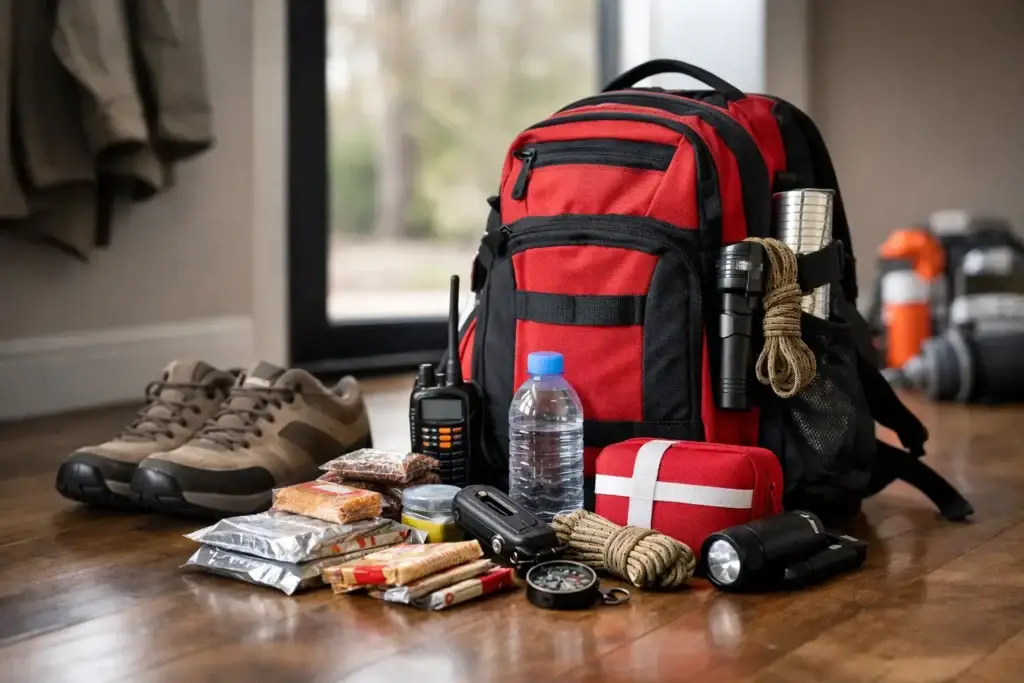
The evacuation order may arrive after the road is already crowded, the wind has shifted, or the power has failed. That is not the moment to search closets for flashlights, prescription bottles, and insurance papers. This emergency go bag checklist helps you pack what your household needs to leave fast, stay safe, and function away from home for at least 72 hours.
A go bag is not a camping bag and it is not a pile of supplies in the garage. It is a portable evacuation kit kept ready near an exit, sized so the person carrying it can move quickly. Build it before fire season, hurricane season, winter storms, or the next local emergency. Then review it before you need it.
Emergency Go Bag Checklist for Every Household
Start with one bag for each person who can reasonably carry one. Adults can carry larger backpacks. Children should have smaller bags with comfort items, identification, and lightweight supplies, but do not depend on a child to carry critical medicine, water, or survival gear. Keep pet supplies in a separate grab-and-go tote or backpack.
Choose a durable backpack with padded straps, multiple compartments, and a water-resistant exterior. A waterproof inner pouch or dry bag protects documents, electronics, and spare clothing if you must travel through rain, floodwater, snow, or smoke-filled conditions.
Water, food, and basic survival supplies
Water becomes a problem quickly during evacuations. Stores sell out, taps may be unsafe, and long traffic delays can turn a short drive into an overnight wait. Pack bottled water or sealed water pouches, aiming for at least one gallon per person per day when weight and storage allow. For a portable bag, carry what you can and add a compact water filter or purification tablets as backup.
Your food should require no cooking, refrigeration, or extra water. Pack foods your family will actually eat, especially if children, older adults, or dietary restrictions are involved. Check expiration dates twice a year.
Include these core supplies:
- Three days of ready-to-eat food such as protein bars, canned meals with a manual can opener, nuts, jerky, and shelf-stable snacks
- A reusable water bottle, water pouches or bottles, and a compact purification method
- A headlamp or flashlight with spare batteries
- A hand-crank or battery-powered emergency radio for weather alerts and local instructions
- A whistle, multitool, duct tape, work gloves, and a lighter or waterproof matches
- A paper map of your area, compass, and written emergency contacts
A portable power bank belongs in every bag. Charge it monthly and pack the cables your household actually uses. A dead phone can mean missed evacuation updates, no navigation, no way to contact relatives, and no access to digital records. A compact solar charger can help during a prolonged outage, but it should not replace a fully charged power bank.
First aid, medications, and personal health
Treat medical supplies as non-negotiable. Pharmacies can close, roads can be blocked, and replacement prescriptions may take time. Pack at least a seven-day supply of essential prescription medications when possible, stored in clearly labeled containers. Add copies of prescriptions and a written list of medications, allergies, medical conditions, and doctors’ contact information.
Your first-aid kit should go beyond a few adhesive bandages. Include gauze, trauma dressings, antiseptic wipes, medical tape, tweezers, pain relievers, antihistamines, anti-diarrheal medicine, blister care, and any necessary personal protective items. If someone in your home relies on an inhaler, EpiPen, glucose supplies, mobility aid, hearing aid batteries, or oxygen equipment, plan around that need first.
Smoke, dust, ash, and debris are common after wildfires, tornadoes, earthquakes, and storms. Pack N95 masks for every household member old enough to wear one safely. Add sturdy shoes, safety glasses, and work gloves. These items can protect you when you must move through broken glass, damaged buildings, or ash-covered areas.
Documents and money to protect your next steps
Disasters do not only threaten physical safety. They can separate you from identification, bank access, insurance information, and proof of residence right when you need help. Keep paper copies in a sealed waterproof pouch. Digital copies on an encrypted drive or secure phone storage are useful, but they are not enough if the device is dead, damaged, or inaccessible.
Pack copies of identification, insurance policies, vehicle registration, property records, medical records, and emergency contacts. Include recent family photos, particularly of children and pets, in case you become separated. Keep some cash in small bills. Card readers and ATMs may not work after a power outage, and cash can pay for fuel, food, and temporary necessities.
Do not store original passports, deeds, or irreplaceable documents in the go bag unless you have no secure alternative. A fireproof, waterproof home document container may be the better place for originals. Your bag needs usable copies that travel with you.
Clothing, shelter, and hygiene without overpacking
The goal is not to pack for every possible situation. The goal is to avoid being cold, soaked, exposed, or unable to care for basic needs. Pack one change of weather-appropriate clothing, warm socks, underwear, a rain poncho, and a compact emergency blanket. In cold climates, add hats, gloves, and hand warmers. In hot regions, prioritize sun protection, electrolyte packets, and extra water.
A lightweight tarp and paracord can provide temporary shelter, shade, or ground cover. They are useful, but they add bulk. If your likely evacuation destination is a hotel, family home, or public shelter, keep the shelter system compact. If you live in a remote wildfire, flood, or hurricane-prone area where travel could be delayed, stronger shelter gear may be worth the weight.
For hygiene, pack toilet paper, wet wipes, hand sanitizer, menstrual products, toothbrushes, toothpaste, and trash bags. Include a small supply of diapers, formula, or infant food if needed. A familiar stuffed animal, book, or card game can also make a shelter or vehicle feel less frightening for children.
Adjust your bag for the disaster most likely to hit
A general go bag is your baseline. Your regional hazards determine the upgrades. Wildfire households need extra N95 masks, goggles, burn gel, and protective clothing. Hurricane and flood areas need waterproof storage, rain gear, insect repellent, and more water protection. Earthquake households need sturdy shoes, gloves, dust masks, and tools for navigating debris. Winter storm bags need insulated layers, hand warmers, blankets, and high-calorie food.
Do not pack equipment you have never used. A complex water filter, unfamiliar radio, or oversized survival tool can fail you when stress is high. Test it at home. Teach every adult where the bags are stored, who grabs medications, who handles pets, and where the family meets if you are separated.
Where to keep your go bags and when to refresh them
Store go bags where you can reach them in seconds: near the primary exit, in a hall closet, or by the garage door. Do not bury them behind seasonal decorations or keep every bag upstairs if your area faces fast-moving wildfire or flooding. Keep a smaller vehicle kit with water, blankets, chargers, and basic safety supplies in case you are away from home when an evacuation begins.
Set two calendar reminders each year, ideally when clocks change. Replace expired food and medications, test batteries and power banks, update documents, rotate clothing sizes for growing children, and adjust supplies for the season. A bag packed five years ago is not a ready bag.
The worst day hits fast. Prepare faster. Put the bags where you can grab them, make sure every family member knows the plan, and finish your emergency go bag checklist before the warning becomes an order.