
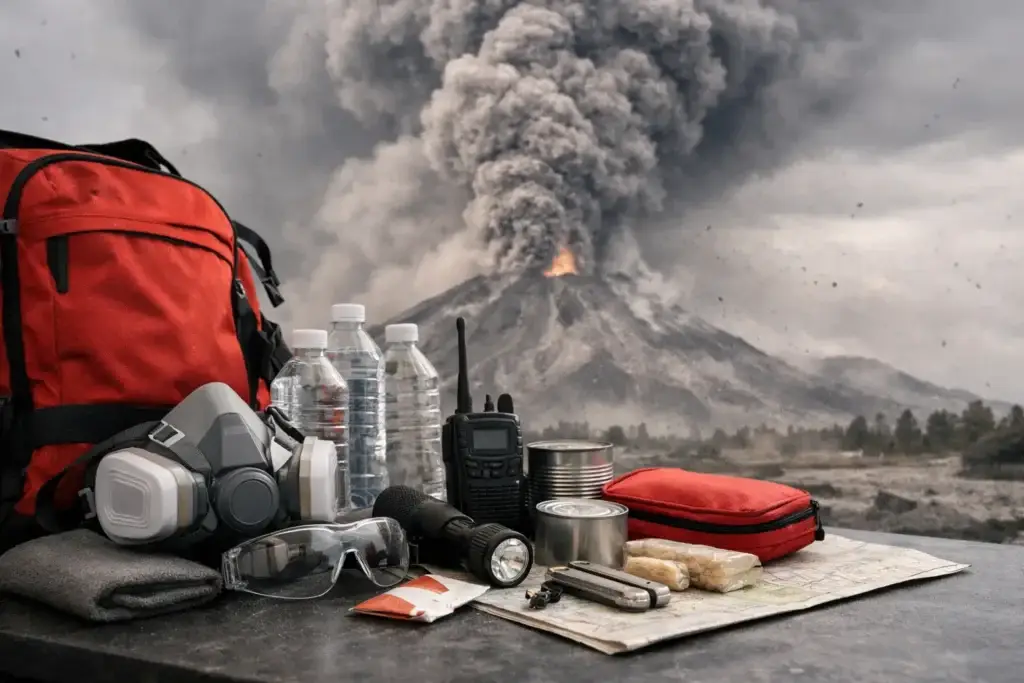
A volcanic eruption can send ash hundreds of miles from the crater. You may not see lava, hear an explosion, or receive much warning before fine, abrasive particles begin settling on your roof, entering your home, and irritating your lungs. Volcanic ash emergency preparedness is not a niche concern for people near a volcano. It is a practical plan for protecting your family wherever ashfall forecasts reach.
Ash is not soft fireplace residue. It is crushed rock, glass, and minerals. The smallest particles can stay airborne, work through gaps around doors and windows, contaminate stored water, damage engines, and make roads slick when mixed with rain. Do not wait until the sky turns gray. The worst day hits fast. Prepare faster.
Why volcanic ash creates a household emergency
The immediate danger is breathing ash. Fine particles can trigger coughing, throat irritation, shortness of breath, and eye pain. Children, older adults, pregnant people, and anyone with asthma, COPD, or heart disease need extra protection. Even healthy adults can be harmed by prolonged exposure, especially during cleanup.
Ash also creates problems that build over time. It can clog gutters and drains, overload roofs when it becomes wet, scratch solar panels and windows, ruin air filters, and foul machinery. A thin layer may look manageable, but a heavy deposit is surprisingly dense. Do not climb onto a roof to remove ash during an active fall unless local emergency officials direct it and conditions are safe.
Power and water service may also be disrupted. Ash can damage electrical equipment, reduce solar output, affect water treatment systems, and make travel difficult. Your plan must cover the first few hours, but it should also support your household through several days of restricted movement and poor air quality.
Build a volcanic ash emergency preparedness kit now
Your regular 72-hour kit is the starting point. Ashfall requires a few additional supplies that protect breathing, water, vehicles, and the home itself. Store them in sealed waterproof bins or heavy-duty bags, not in an open garage where ash can coat everything.
At minimum, keep these items ready:
- N95 respirators in adult and child-appropriate sizes, plus extras for cleanup and visitors
- Sealed safety goggles that fit around the eyes, not open-sided glasses or sunglasses
- A battery-powered emergency radio, flashlights, spare batteries, and a portable power station
- At least one gallon of stored drinking water per person per day, plus water containers with secure lids
- Plastic sheeting, painter’s tape, towels, and weatherstripping for reducing ash entry around gaps
- Heavy-duty work gloves, long sleeves, sturdy shoes, shovels, soft brooms, and garbage bags for cleanup
N95 masks matter because ordinary cloth face coverings do not reliably filter fine ash. A respirator only works when it seals well against the face. Keep several models on hand if possible, because fit varies. Children and people with facial hair may not get a proper seal, so their safest option is to remain indoors with filtered air whenever ash is present.
Goggles are equally practical. Ash in the eyes feels like sand and can cause scratches. Contact lens wearers should switch to glasses during ashfall, since particles can become trapped beneath lenses.
Your water supply needs special attention. Store drinking water before an eruption alert, and keep every container covered. Ash-contaminated water can look clear while still carrying fine particles. If officials issue a water advisory, follow it. Boiling water does not remove ash or chemical contaminants, and a basic filter may not be sufficient for every situation.
Make your home harder for ash to enter
Before ash begins falling, close all exterior windows and doors. Turn off window air conditioners that draw outdoor air inside, and set central HVAC systems to recirculate if that option is available. If your system has a high-efficiency filter recommended by its manufacturer, install a clean one before the event and keep replacements ready.
Do not permanently seal every vent or create unsafe indoor conditions. Gas appliances, fireplaces, and other combustion systems may require ventilation. The right approach depends on your home and equipment. Reduce outside air entry where you safely can, then follow local public health guidance.
Move outdoor furniture, tools, pet supplies, and children’s toys into a garage or covered area. Cover sensitive equipment that cannot be moved. Park vehicles under cover if possible, but avoid driving them into a closed garage while the engine is running. Ash can scratch paint and windshields, clog cabin air filters, and damage engines if it enters the intake system.
If you have a rainwater collection system, disconnect or bypass it before ashfall. Ash on a roof will wash into tanks and can make stored water unsafe without appropriate treatment. Cover wells, outdoor water containers, and garden ponds when practical.
Decide when to shelter and when to leave
Most ashfall events call for sheltering indoors, not evacuation. Going outside exposes your household to airborne particles and creates avoidable driving risks. Stay inside, monitor official emergency updates by radio or phone, and limit door openings.
Evacuate only when authorities order it or when a separate threat makes your home unsafe. Volcanic hazards can include wildfire, lahars, flooding, toxic gases, earthquakes, and structural damage. If an evacuation order is issued, take your go-bags, medications, identification, cash, water, masks, goggles, and a map showing more than one route.
Do not assume your usual route will remain open. Ash reduces visibility, and wet ash can turn roads slippery. Drive only if necessary. Keep windows closed, set the vehicle ventilation to recirculate, use headlights, and leave extra distance between vehicles. Avoid running windshield wipers on a dry ash-covered windshield. First rinse the glass if water is available, because wiping abrasive ash can permanently scratch it.
Protect children, pets, and people with medical needs
Your household plan should name the person responsible for each child, pet, and critical medication. During a fast-moving alert, vague plans fail. Put medications, copies of prescriptions, inhalers, mobility aids, and backup batteries for medical devices in one easy-to-grab location.
Keep children indoors and give them a low-stress routine: meals, water, activities, and a designated interior room with the cleanest air. Explain that ash is dangerous dust, not snow and not something to play in. Outdoor play, biking, and sports should stop until officials say air conditions are safe.
Bring pets inside. Their paws, fur, food bowls, and water dishes can collect ash. If a dog must go outdoors briefly, wipe paws and coat with a damp cloth before it comes back in. Keep animal food and water covered, and watch for coughing, eye irritation, or unusual breathing.
Clean up without creating a second exposure
Cleanup begins only after ashfall has stopped and local officials say it is safe to begin. Wear an N95 respirator, sealed goggles, gloves, long sleeves, and closed-toe shoes. Keep children, pets, and anyone with breathing conditions away from cleanup areas.
Use gentle methods. Lightly dampen ash before sweeping so it does not become airborne, but do not use high-pressure water. Too much water turns ash into a heavy slurry that can clog drains and add major weight to roofs. Sweep patios, walkways, and driveways carefully, then bag the ash according to local disposal instructions.
Do not use leaf blowers, shop vacuums without proper filtration, or dry sweeping indoors. These methods send fine particles back into the air. Use a damp cloth for hard surfaces and a HEPA-filter vacuum if available. Replace HVAC and vehicle air filters after the event, especially if ash was heavy or prolonged.
Pay attention to your roof and gutters from the ground. If ash accumulation appears substantial, contact a qualified professional. Wet ash can be heavy enough to stress roofs, and walking on an ash-covered surface raises the risk of slipping or causing damage.
Put your plan where you can use it
A bin full of gear is not a plan if nobody knows where it is. Assign a storage location for masks, water, radio, first aid, and go-bags. Put emergency contacts and medical information on paper. Choose an out-of-area family contact, since local phone networks can become congested.
Review the plan before volcanic activity becomes a headline. Check mask sizes, replace expired food and water, test your radio and power supply, and make sure every driver knows how to protect a vehicle from ash. If your household has never practiced closing up the home or loading the car, do it once when there is no pressure.
Ashfall does not give families the luxury of shopping after the alert. Get the respirators, water, sealed storage, and power supplies in place now, then keep your plan simple enough to carry out when the air outside is no longer safe to breathe.