
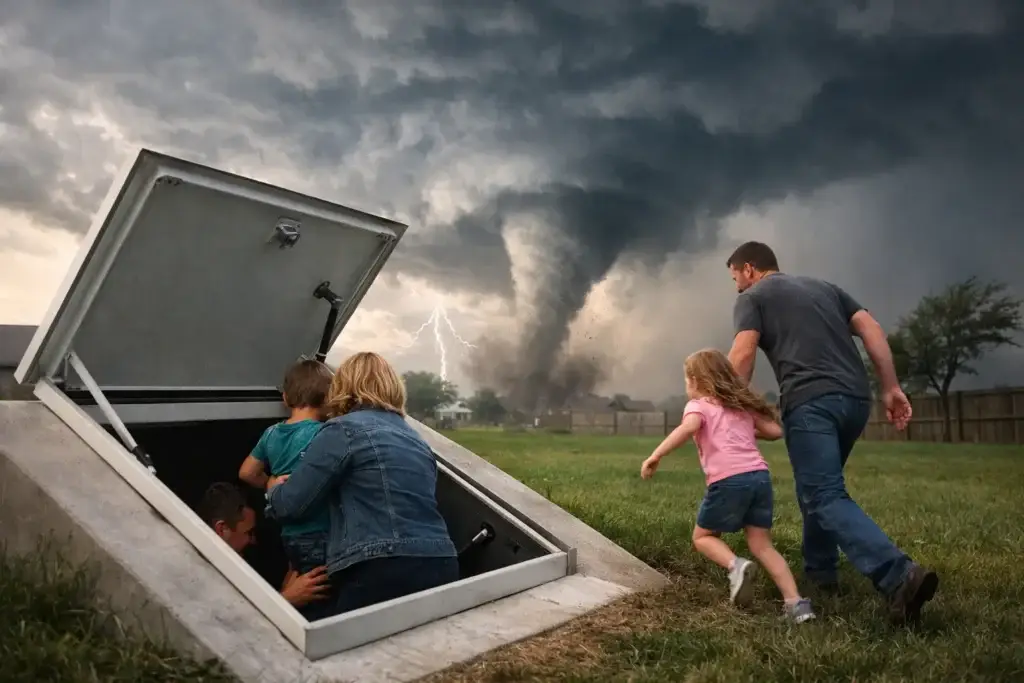
A tornado warning is not the time to clear out a closet, search for shoes, or decide whether the basement is safe enough. Storm shelters give your family a known, engineered place to go when violent wind turns minutes into the only margin you have. The right shelter can be the difference between taking cover and being exposed to collapsing walls, flying debris, and shattered glass.
For households in tornado-prone parts of the United States, this is not a luxury purchase or an extreme-prepper project. It is a home-safety decision. But not every shelter fits every property, budget, or family. Choosing one requires more than picking the cheapest steel box you can find.
What Storm Shelters Are Designed to Do
A true residential storm shelter is built to protect occupants from extreme wind and wind-borne debris during a tornado or severe straight-line wind event. Its job is not to keep the whole house standing. Its job is to preserve a survivable space if the house around it is badly damaged.
That distinction matters. A bathroom, interior closet, or basement may be safer than a room with windows, but those spaces are not automatically storm shelters. Ordinary doors, masonry walls, garage ceilings, and basement windows can fail under tornado forces. A purpose-built shelter uses reinforced materials, tested doors and latches, and a secure anchoring system intended to resist impact and uplift.
When comparing products and installers, look for shelters designed to meet or exceed FEMA guidance and the ICC 500 storm shelter standard. These benchmarks address wind pressure, debris impact, ventilation, doors, hardware, and anchoring. Do not rely on vague claims such as “tornado resistant” or “heavy duty.” Ask exactly what standard the model meets, how it was tested, and whether the installation method is approved for your home.
Choose the Right Type of Storm Shelter
The best shelter is the one your household can reach quickly, enter easily, and maintain year after year. A technically strong shelter placed too far from the house may not protect a family with young children, older adults, mobility limitations, or pets when a warning arrives after dark.
Above-ground safe rooms
Above-ground shelters are commonly installed in a garage, on a concrete pad, inside a large room, or near a home’s exterior. They can be steel, reinforced concrete, or specially engineered composite construction. For many households, an above-ground model is the practical choice because it avoids the excavation and drainage concerns of an underground unit.
Access is their major advantage. You do not need to descend stairs, navigate a wet yard, or force open a hatch. This can be critical for anyone using a wheelchair, recovering from an injury, carrying an infant, or helping an elderly relative. The trade-off is space. A garage shelter consumes parking or storage area, while an outdoor unit must be close enough to reach safely before conditions become dangerous.
Underground shelters
Underground shelters are often installed beneath a garage floor, in a yard, or inside a basement. They are out of sight and can preserve indoor living space. Their below-grade location can also make them appealing to homeowners who do not want a large visible structure.
However, underground does not automatically mean better. Poor drainage can leave a shelter damp or flooded. Exterior units can become difficult to access during heavy rain, hail, ice, or rapidly deteriorating wind conditions. A hatch must open reliably, and everyone in the household must be physically able to use it. If your area experiences flash flooding or a high water table, discuss drainage, seals, and site conditions with a qualified installer before committing.
Community storm shelters
Some neighborhoods, schools, mobile home parks, and public buildings offer community shelter space. This can be better than having no protected location at all, especially for renters. But it is not the same as a shelter steps from your bedroom.
You may have to travel in dangerous weather, wait in line, follow limited operating hours, or find that the facility is full. Learn the location, entry procedures, pet rules, and opening triggers well before severe-weather season. If travel time is more than a few minutes, maintain a backup plan at home.
Location Matters More Than Convenience
A shelter needs to be reachable from where people actually sleep and spend time. A detached backyard unit may look convenient on a sunny afternoon but become a risky sprint when the sky is producing large hail and tornado debris is already moving.
For most homes, a garage-based or interior above-ground shelter provides the fastest access. If you choose an underground garage shelter, make sure the garage door does not have to be opened first. If you choose an exterior model, keep the route clear of furniture, tools, trash bins, and anything that could become an obstacle in the dark.
Avoid placing a shelter where floodwater can collect, where a falling tree is likely to block the entrance, or where a damaged vehicle could trap the door. An installer should assess the slab or foundation, anchoring requirements, utilities, drainage, and local building rules. A shelter is only as dependable as the surface and hardware holding it in place.
Size It for People, Pets, and Real Life
Do not buy based on the number of people in your household alone. Count the people who may be there during a warning: children home from college, grandparents, neighbors who need help, and overnight guests. Include pets. A frightened dog may not be left safely in the path of a tornado just because the shelter is sized tightly.
Think about how long your household could be inside. Tornado passage may be brief, but delays after a storm are common. Debris can block exits, power can fail, and emergency responders may be managing widespread damage. You need enough room to sit, breathe, communicate, and care for children without overcrowding the space.
Before purchase, have every household member practice entering the model or a similarly sized space. Check whether the door clears the garage vehicle, whether the latch is manageable, and whether someone can assist a child or mobility-limited family member. A shelter that works only for the strongest adult in the home is not a complete family plan.
What to Keep Inside Your Storm Shelter
A storm shelter is not a 72-hour evacuation kit, but it should contain enough supplies to handle injury, darkness, stress, and a blocked exit. Keep items in a waterproof tote or mounted organizer so they stay clean and do not interfere with the door.
| Essential item | Why it belongs in the shelter | |—|—| | Battery or hand-crank weather radio | Receives warnings and updates when cell service or power fails | | Flashlights and spare batteries | Prevents injuries in a dark shelter or damaged home | | First-aid kit and prescription medications | Treats cuts and supports urgent medical needs | | Water and simple snacks | Helps if you are trapped or waiting for help | | Whistle, charged power bank, and charging cable | Makes it easier to signal rescuers and contact family | | Helmets, sturdy shoes, and work gloves | Protect against head injuries, nails, glass, and debris after the storm | | Pet leash, carrier, water bowl, and supplies | Keeps animals controlled and cared for under stress |
Keep a printed emergency contact list inside as well. Phones can be dead, locked, lost, or unusable when you need a number most. If anyone in your home uses medication, oxygen, hearing aids, mobility equipment, or infant supplies, plan specifically for those needs rather than assuming a generic kit covers them.
Check the supplies twice a year, ideally when clocks change or before peak tornado season. Replace expired food, batteries, medications, and bottled water. Test lights, radio reception, door latches, and ventilation openings. Preparedness fails quietly when equipment is stored and forgotten.
Installation Mistakes That Can Put You at Risk
The most dangerous shelter mistake is assuming a heavy unit is automatically safe. A shelter must be correctly anchored to a suitable foundation. Improper bolts, an unverified slab, corrosion, or a do-it-yourself modification can compromise performance when wind forces pull and twist the structure.
Never block the shelter entrance with boxes, bicycles, lawn equipment, or a parked vehicle. Keep the keys or release mechanism accessible if your model requires one, but do not make access dependent on finding keys during a warning. Teach every responsible adult how the door opens and how to secure it from inside.
Do not wait for tornado season to create the family drill. Decide now who brings children, who handles pets, who grabs phones and the shelter kit, and how you will account for everyone. The plan should be simple enough to use when the warning wakes you from sleep.
Take Action Before the Forecast Turns
A tornado watch gives you time to prepare. A tornado warning means the threat is happening or imminent. By then, shopping, measuring the garage, and comparing installation quotes are over.
Start with your location, household size, access needs, and property conditions. Then choose a tested shelter, have it professionally installed as required, stock it with the essentials, and practice getting inside. The worst day hits fast. Give your family a place that is ready before the sirens begin.