
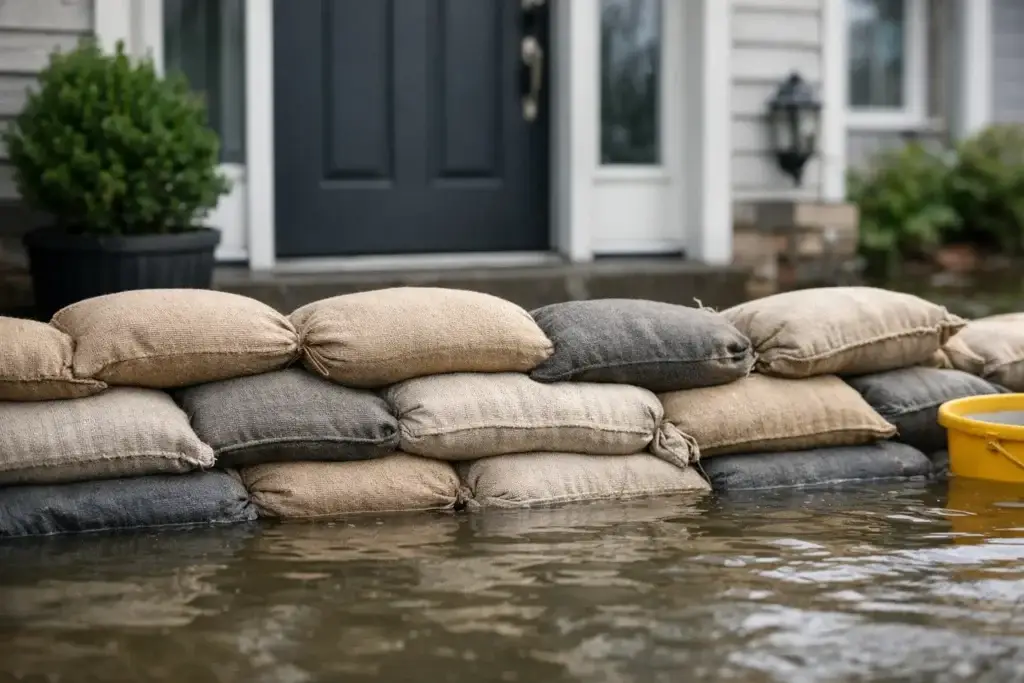
Floodwater does not wait for a convenient hour. Once water is moving down the street or pooling across your yard, every minute spent looking for bags, sand, and plastic sheeting is a minute you may not have. Knowing how to use sandbags for flooding before a warning is issued can help reduce water entering through doors, garage openings, low vents, and other vulnerable areas of your home.
Sandbags are not a guarantee that your property will stay dry. They can slow shallow, slow-moving water and redirect runoff, but they are not built to stop fast-moving water, deep flooding, storm surge, or water already pushing through cracks beneath your foundation. Use them as one layer of your flood plan, not your entire plan. Your family’s safety comes first.
Get the Right Sandbags and Supplies Before the Storm
A sandbag barrier is only as useful as the materials behind it. Keep empty burlap or woven polypropylene sandbags stored in a dry place, along with heavy-duty plastic sheeting, work gloves, a shovel, and a way to transport sand. Polypropylene bags are common because they are durable and resist moisture for a limited period, but sunlight weakens them over time. If you store filled bags outside for long periods, cover and inspect them.
For a home flood kit, have enough materials to protect the openings most likely to take on water. A typical exterior doorway can require dozens of bags for a low barrier, especially if you need to extend it beyond the doorframe. Do not assume a few bags piled at the threshold will do the job.
| Item | Why it matters during flooding | |—|—| | Empty sandbags | Lets you build barriers sized for your doors, garage, and low spots | | Clean sand or fill material | Gives bags weight and shape so they seal against one another | | Heavy-duty plastic sheeting | Reduces seepage through the bags and protects the water-facing side | | Work gloves and boots | Helps prevent cuts, blisters, and contact with contaminated water | | Shovel and wheelbarrow | Speeds filling and moving heavy bags before conditions worsen | | Battery-powered radio | Keeps you informed if power or cell service fails |
Sand is preferred because it settles tightly, but soil can work in an emergency. Gravel is less effective because it leaves larger gaps. Do not use lightweight materials such as mulch, leaves, or loose household trash. They will not create a stable barrier.
How to Use Sandbags for Flooding at Doors and Low Openings
Start by choosing the right location. Build the barrier on firm, level ground just outside the opening you need to protect. Remove sticks, rocks, and debris first. A bag placed over uneven debris will leave channels for water to move through.
Lay a sheet of plastic on the ground before placing bags, with enough extra material to run up the water-facing side of the barrier. This does not make the wall waterproof, but it helps reduce seepage. For a doorway, extend the plastic well beyond both sides of the opening. Water looks for the smallest path, including around the ends of your barrier.
Fill each bag about halfway to two-thirds full. Overfilled bags are harder to shape and do not nest together well. Leave enough empty space at the top to fold the bag over after filling. You usually do not need to tie the bags shut. Fold the open end underneath the bag as you place it, facing away from the expected water flow.
Place the first row with bags laid lengthwise, pressed tightly together. Flatten each bag as you set it down. Then place the second row so each bag overlaps the seam between two bags below it, much like laying bricks. This staggered pattern matters. Stacking bags directly on top of one another creates vertical gaps where water can force its way through.
Use your feet or the back of a shovel to tamp each bag into place. The goal is contact, weight, and a low profile. A loose pile of bags can shift when water builds against it.
For a shallow doorway barrier, two or three staggered layers may help redirect runoff. If you need a taller barrier, widen the base as you build. A narrow wall stacked too high can collapse or tip toward the house. As a general rule, the base should be substantially wider than the top, creating a stepped, pyramid-like shape rather than a vertical stack.
Protect Garage Doors, Vents, and Yard Runoff Paths
Garage doors are frequent flood entry points because they span a wide opening and sit low to the ground. Build a broad barrier across the entire door, extending beyond both ends. Do not stack bags only against the center of the garage door. Water will simply travel to the unprotected sides.
Low foundation vents, crawlspace openings, basement stairwells, and exterior utility openings also deserve attention. If your property repeatedly receives water from one side, use bags to redirect surface runoff before it reaches the house. A shallow curved berm can guide water toward a safe drainage path, but never redirect water onto a neighbor’s property or block public drainage systems.
Do not place sandbags directly over a storm drain if doing so causes water to back up toward homes, roads, or people. In some situations, keeping a drain clear is safer than trying to block it. It depends on where the water is coming from and where it can safely go.
Build the Barrier Before Water Arrives
Sandbags work best when placed before the ground is saturated and before flowing water is pressing against your property. Waiting until you are standing in floodwater creates several problems: the bags become harder to place, the ground gets slippery, contamination risks increase, and moving water can knock you down.
Never walk or drive through floodwater to collect supplies or finish a barrier. Just 6 inches of moving water can sweep a person off their feet, and deeper water can move a vehicle. Floodwater may hide washed-out pavement, sharp debris, electrical hazards, and sewage contamination.
If authorities issue an evacuation order, leave. Do not stay behind to defend a house with sandbags. Barriers protect property only to a point. They do not protect you from rising water, structural damage, downed power lines, or a road that becomes impassable after dark.
Know What Sandbags Cannot Do
A properly built sandbag wall leaks. That is normal. The objective is to slow and redirect water, buying time and reducing the amount that reaches vulnerable openings. Keep towels, buckets, a wet/dry vacuum if power is safely available, and plastic storage bins ready for indoor protection.
Sandbags are a poor answer for coastal storm surge, flash flooding, or water expected to rise several feet. They are also limited when groundwater is rising beneath the slab or water is entering through floor drains and sewer backups. In those cases, move valuables, medications, documents, electronics, and emergency supplies to higher levels immediately.
Keep critical records in waterproof bags or containers. Put your go-bags, drinking water, first-aid supplies, emergency radio, chargers, and medications where floodwater cannot reach them. A barrier at the front door will not help if the items your family needs are stored on the basement floor.
After the Water Drops
Treat used sandbags as contaminated. Floodwater may contain fuel, sewage, chemicals, bacteria, and debris. Wear gloves and waterproof boots when handling them. Do not reuse bags that were exposed to contaminated floodwater for gardens, children’s play areas, or indoor projects.
Follow local guidance for disposal. Some communities collect flood-damaged sandbags separately, while others provide specific instructions for clean versus contaminated fill. Never dump sand into storm drains, creeks, or vacant lots.
Before the next storm season, replace degraded bags, restock plastic sheeting, and identify exactly where your barriers will go. Take photos of successful placement and keep a simple map with your emergency supplies. When the warning arrives, you should be moving with a plan, not making one under pressure.
The worst day hits fast. Set aside the bags, fill material, and protective gear now, then make sure everyone in your household knows where they are. A prepared response starts long before the first drop of floodwater reaches your door.