
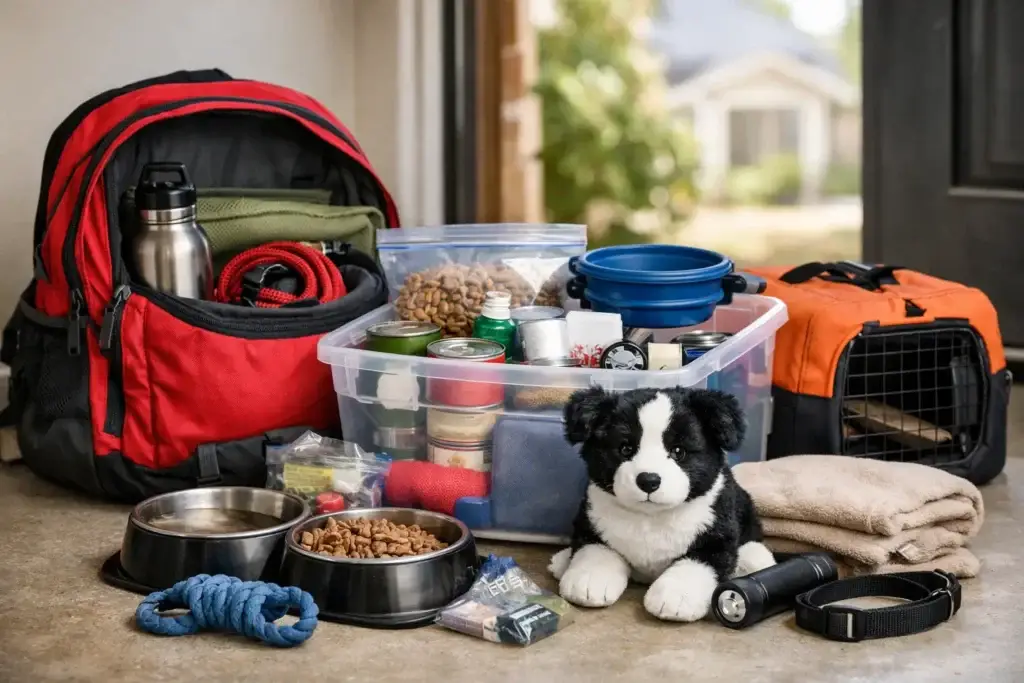
When evacuation orders arrive, pets do not understand sirens, smoke, rising water, or the rush to leave. They hide, panic, bolt through open doors, and depend entirely on you to get them out safely. A pet evacuation kit checklist turns a frantic search for food, medication, and paperwork into one fast grab before conditions get worse.
Do not assume you can return home for supplies. Wildfires can shift overnight. Floodwater can close roads without warning. A hurricane evacuation may last days longer than expected. Build your pet kit now, store it near your household go-bags, and make sure every adult in the home knows where it is.
Start With a Safe Way to Transport Your Pet
A carrier, crate, or leash is not an optional accessory during an evacuation. It is the tool that keeps your pet under control in a crowded shelter, motel parking lot, damaged neighborhood, or unfamiliar temporary housing.
Every cat needs a secure, labeled carrier. Even calm indoor cats can scratch, bite, or disappear when frightened. Choose a carrier large enough for your cat to stand and turn around, but practical enough for one person to carry. Keep a small towel inside to reduce stress and provide familiar scent.
Dogs need a sturdy leash, harness, and collar with current identification. A harness gives you better control than a collar alone, especially if your dog backs out of a collar when scared. Pack a backup leash and slip lead. If your dog is crate-trained, a collapsible crate can make sheltering or hotel stays far safer.
For birds, reptiles, rabbits, and small mammals, plan around temperature, ventilation, and escape risk. Their normal enclosure may be too large or fragile to move quickly. Use an appropriate travel carrier, then pack the bedding, heat source, food, and cleaning items that species requires.
Pet Evacuation Kit Checklist: The 72-Hour Basics
Your kit should support each pet for at least 72 hours. In areas prone to hurricanes, wildfires, or widespread flooding, seven days of supplies is the safer target. Emergency shelters may not accept pets, stores may be closed, and your usual brand of food may be impossible to find.
Pack these essentials in a waterproof tote, backpack, or clearly marked duffel bag:
- Food and water: Pack at least three days of food per pet, plus a manual can opener for canned food. Include bottled water or dedicated water containers. Do not rely on a disaster site to have safe water for animals.
- Food and water bowls: Collapsible bowls save space, but use sturdy bowls if your pet refuses unfamiliar ones. Pack enough water for drinking and basic cleanup.
- Medications: Keep a minimum seven-day supply of prescription medicine when possible, along with dosing instructions. Rotate medications before they expire.
- Waste supplies: Include poop bags for dogs, a small litter pan and litter for cats, paper towels, disinfecting wipes, and disposable gloves.
- Comfort items: A familiar blanket, small bed, chew toy, or favorite toy can help reduce stress. Keep this practical. Comfort should not take space away from water, medication, or transport gear.
- Basic first-aid supplies: Add gauze, nonstick pads, self-adhering bandage wrap, saline rinse, tweezers, an emergency blanket, and pet-safe wound care products recommended by your veterinarian.
Store food in sealed containers that protect it from moisture and pests. Rotate it on the same schedule as your household emergency food. A bag of stale kibble or expired canned food is not preparedness.
Add Disaster-Specific Protection
Your location changes what belongs in the kit. For wildfire evacuation, include extra water, a pet-safe eye rinse, towels for soot cleanup, and a pet-sized air carrier cover or clean cloth to reduce exposure during transport. Never put a mask on an animal unless your veterinarian has shown you an appropriate option. Most pets will not tolerate one safely.
For flood and hurricane risk, prioritize waterproof document storage, towels, absorbent pads, and extra leashes. Floodwater carries fuel, sewage, sharp debris, and disease. Do not allow pets to drink from puddles or walk through standing water when another route is available.
For winter storms, pack insulated bedding, extra calories if your veterinarian recommends them, and a safe warming plan for small animals. For heatwaves and power outages, add cooling towels, extra water, and a battery-powered fan only if it can be used without creating an entanglement hazard.
Keep Records That Prove Your Pet Belongs to You
Evacuations separate families from pets every year. A visible ID tag helps, but it is not enough. Tags break, collars slip off, and phone numbers change.
Keep a waterproof folder and a password-protected digital copy of essential pet records. Include recent photos of you with each pet, vaccination records, rabies certificate, microchip number, veterinary contact information, medication list, feeding schedule, and any behavior notes. A photo showing a distinct coat pattern, scar, or marking can help establish identification if your pet is found without a collar.
Ask your veterinarian for a printed health summary before disaster season begins. Some boarding facilities, shelters, and hotels require proof of current vaccinations. Without it, your housing options shrink at the exact moment you need them most.
Microchip your pets and verify that the registration account has your current phone number, email address, and emergency contact. A microchip only works if the information attached to it is accurate.
Plan for Housing Before You Need It
The hardest part of pet evacuation is often not leaving. It is finding a safe place to stay. Many public evacuation shelters cannot house animals in the same area as people, and some accept only service animals. Do not wait for an alert to find this out.
Identify several pet-friendly hotels, boarding facilities, veterinary offices, friends, and family members outside your immediate risk area. Call ahead before disaster season to confirm policies, size limits, deposits, vaccination requirements, and whether they accept cats or exotic pets. Keep the addresses and phone numbers in your kit and in your phone.
Build a buddy plan with a trusted neighbor, relative, or friend. Choose someone who can evacuate your pets if you are away, injured, or blocked from reaching home. Give them written feeding instructions, a house key or access code, and permission to obtain emergency veterinary care if needed. This is especially critical for people who commute, travel for work, or live in areas where fires and flash floods move fast.
Practice the Exit With Your Pets
A kit does not solve a pet evacuation problem if your cat vanishes under the bed or your dog fights the carrier. Practice makes the equipment familiar before fear takes over.
Leave carriers accessible and make them positive places with treats, bedding, or meals inside. Practice loading each pet, securing the carrier in the vehicle, and driving a short distance. For dogs, rehearse getting them into the car with their harness and backup leash already attached.
Assign responsibilities in your household. One person handles children, another loads pets, and another grabs documents and emergency bags. If you are alone, keep carriers and leashes close to your exit route. Small delays become dangerous when smoke is approaching, water is rising, or officials are telling residents to leave immediately.
Check Your Kit Every Season
Set a calendar reminder at least twice a year to inspect your pet evacuation supplies. Replace expired food, water, medications, batteries, and worn leashes. Update photos and paperwork. Adjust quantities when you adopt another pet, change medications, or move to a different climate.
Keep the kit where you can reach it even if the garage is blocked, the power is out, or you have only minutes to leave. A labeled container by the main exit, in a hall closet, or in your vehicle may be more useful than a perfectly organized bin buried in a storage room.
Your pet will not pack for itself, find a carrier, or explain which medication it needs. Build the kit while the sky is clear, put it where you can grab it, and make leaving together part of your emergency plan.